
Protection, recognition and restraint
Why Does the Immune System Attack Its Own Body?
Understand how autoimmune disease targets healthy tissue, how immune tolerance helps protect us, and why symptoms, ANA tests and treatment need disease-specific context.

What is autoimmune disease?
Autoimmune disease develops when an immune response harms the body's own cells or tissues. It is a broad category rather than one illness with a single symptom pattern. The immune system normally helps defend against infection, but effective protection also requires limits on what it attacks and how long the response continues.
That is why describing autoimmunity only as a weak immune system can mislead. A damaging response can be active and persistent while being directed at an unsuitable target. This explanation follows three questions: which tissue is affected, which safeguards are failing, and what evidence shows the effect on that tissue. It does not turn those questions into a way to diagnose yourself from a photograph or checklist.
The real blood-cell photographs and laboratory footage accompanying this topic show biological structures and behavior in specific specimens. Their captions identify what was recorded. A normal blood-cell image is context for the immune system, not proof that its donor has an autoimmune disease.
Read the source NIAMSMedlinePlus, US National Library of Medicine
Cells, antibodies and immune recognition
The immune system includes different kinds of cells, tissues and signaling pathways. Some immune cells produce antibodies, which are proteins able to bind particular molecular features. Other cells help coordinate responses or contribute directly to damaging a target. These roles interact; an immune response is not the action of a single independent defender.
Autoantibodies are antibodies directed against components of the body itself. They are important in many autoimmune conditions, but the presence of an autoantibody is not equivalent to a complete account of a disease. The cell response, the surrounding signals and the tissue involved can change the outcome. In particular, finding an antibody in a blood test does not automatically establish that it is causing a person's symptoms.
An animated cell-and-target model separates those relationships so that the viewer can follow them. Its shapes and colors are visual aids. They are not a claim that immune cells consciously identify enemies or that a molecular recognition problem has one universal solution.
Read the source NIAMSNobel Committee for Physiology or MedicineMedlinePlus, US National Library of Medicine
See the distinction
Four questions that describe different parts of the problem
| Question | What it tells you |
|---|---|
| What is the response targeting? | The tissue or function involved, rather than a general immunity score. |
| What did the test detect? | A specific finding that needs clinical interpretation. |
| Is harmful activity controlled? | A disease-specific treatment question. |
| Is a function missing? | Whether support or replacement, such as insulin, is needed. |
Immune tolerance: the safeguards against self-directed harm
Immune tolerance describes the controls that usually prevent harmful responses against the body's own tissues. During immune-cell development, many strongly self-reactive cells are removed or made unresponsive. These developmental safeguards are important, but they do not eliminate every potentially self-reactive cell.
Additional controls act after cells have developed. Regulatory T cells are one important part of this continuing regulation: they help restrain other immune responses. The Nobel Committee's explanation of peripheral immune tolerance describes the work that established this role. It also explains why an understanding based only on developmental screening was incomplete.
The practical point is that tolerance is maintained through several interacting processes. A disease cannot always be explained by one missing guard or a single failed checkpoint. Different forms of immune dysregulation can lead to different patterns of disease, and research into those mechanisms does not mean that every proposed treatment has become established care.
Read the source Nobel Committee for Physiology or Medicine
Why tissue targets change the illness
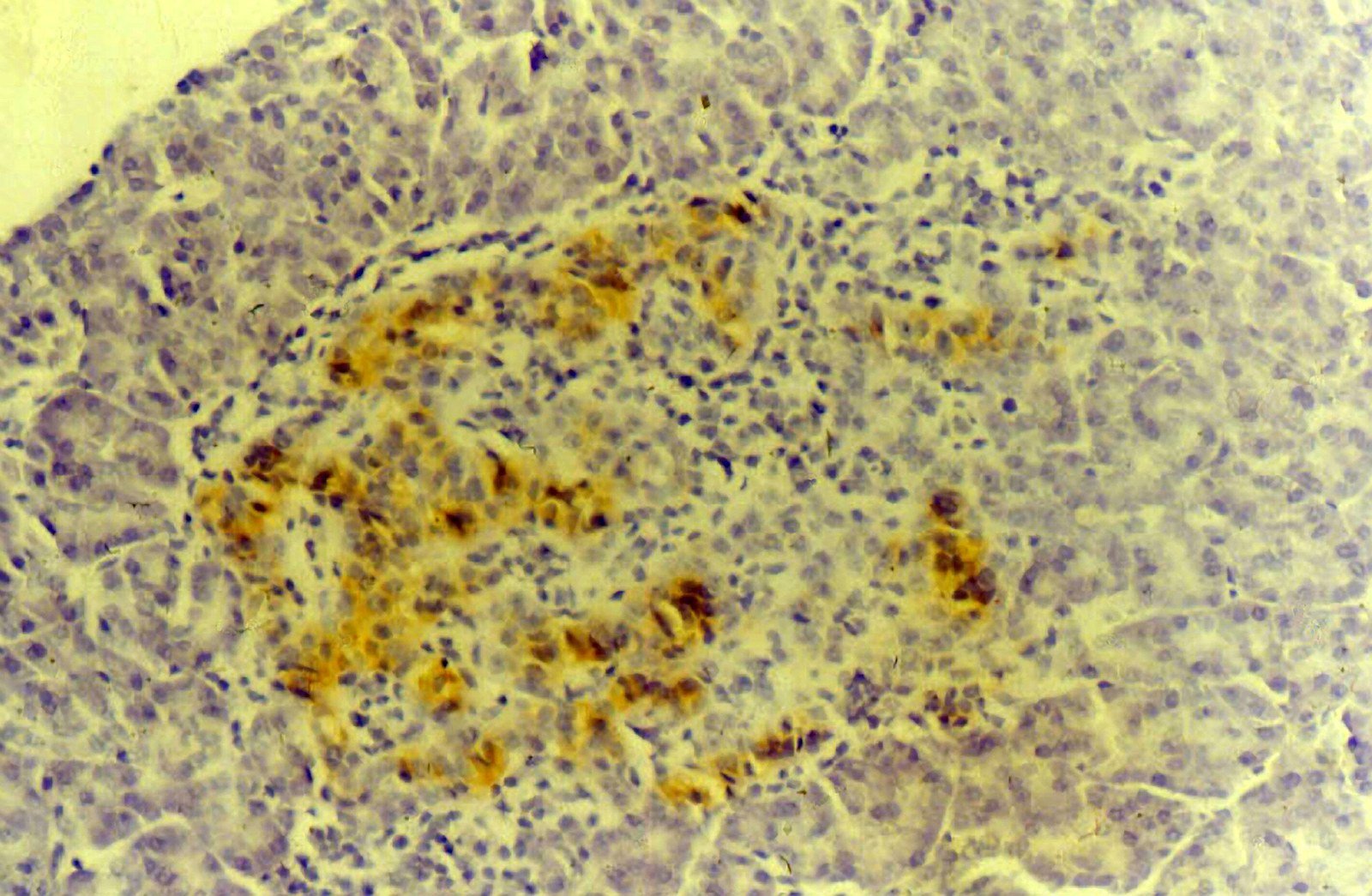
Type 1 diabetes provides a clear organ-specific example. The immune system destroys insulin-producing beta cells in the pancreas, leaving the body with little or no insulin. Insulin is a hormone that helps the body use glucose from the blood. The loss of a particular cell function explains an important part of the disease and why insulin replacement matters.
Rheumatoid arthritis involves the lining of joints and may also affect areas outside the joints. Lupus can involve several tissues, including skin, joints and kidneys. These illnesses belong to the broad autoimmune category, but their affected tissues, clinical course, investigations and treatment are not interchangeable.
The pancreatic micrograph below is a real specimen from a patient with type 1 diabetes, supplied by Wellcome Collection. Its catalog explains that insulin-producing cells have brown labeling, cell nuclei are blue and lymphocytes have entered the islet. It illustrates a particular tissue process. It is not a general diagnostic image for everyone with diabetes, nor a picture of every autoimmune disease.
Read the source NIDDKNIAMSAnne Clark, University of Oxford / Wellcome Collection
What causes autoimmune diseases?
For most autoimmune diseases, no single cause explains every case. Research points to interactions between inherited susceptibility and environmental influences. A family history can affect someone's likelihood of developing disease, but it does not make an individual outcome inevitable.
Infections and other exposures may contribute in particular settings. Evidence that an exposure is associated with disease, or is being investigated as a possible trigger, does not establish the cause of one person's illness. The distinction is especially important when discussing a broad category that contains many different conditions.
Autoimmune disease itself is not contagious. The possible role of an infection as a contributor does not mean that another person can catch the autoimmune condition. Similarly, a complex set of genetic and environmental influences does not support claims that one food, supplement or exposure explains all autoimmunity.
Read the source NIEHSMedlinePlus, US National Library of Medicine
Symptoms, flares and remission
The symptoms depend on the tissues affected. Inflammation can produce redness, swelling, heat and pain, but other illnesses can produce those signs too. Fatigue, aches and rashes are not specific enough on their own to identify an autoimmune disease. People with the same diagnosis can also have different experiences.
Some diseases have flare-ups, when symptoms become more severe, followed by periods of improvement or remission. Remission means that disease activity or symptoms have improved; it does not automatically mean that the underlying condition has permanently disappeared. The meaning and monitoring of remission depend on the particular disease.
A symptom pattern over time can be more informative than a single isolated observation. Persistent or concerning symptoms warrant a clinical assessment. An educational article can explain why the pattern matters, but it cannot determine the diagnosis or appropriate investigation for an individual reader.
Read the source MedlinePlus, US National Library of MedicineNIAMS
Can a positive ANA test diagnose autoimmune disease?
An antinuclear antibody, or ANA, test checks for antibodies directed against components of the cell nucleus. It can contribute to investigating some autoimmune conditions. The result has to be interpreted alongside the reason for testing and the rest of the clinical evidence.
A positive ANA result does not by itself prove that someone has an autoimmune disease. Some healthy people have a positive result, and certain medicines can affect antibody findings. Conversely, a negative result does not completely rule out every autoimmune disorder. There is no universal autoimmune blood test that resolves every possible disease.
NIAMS describes rheumatoid arthritis diagnosis as a combination of medical history, physical examination, laboratory tests and, where appropriate, imaging. No single test establishes every case, and some people can have rheumatoid arthritis with normal blood tests. These limits explain why testing should answer a clinical question rather than replace the examination and history.
Read the source MedlinePlus, US National Library of MedicineNIAMS
How treatment addresses damage and missing function
Treatment depends on the condition and the person. Its purposes can include reducing harmful inflammation, preventing further tissue damage, relieving symptoms and replacing a function that has been lost. Insulin in type 1 diabetes is an example of replacing a missing hormone. Immune-directed treatment and replacement of a lost function address related but different problems.
In rheumatoid arthritis, some medicines act on immune messages to reduce the damaging response. Treatments that modify immunity can also affect protection against infection. This benefit-and-risk balance is one reason clinical monitoring matters and why a treatment that suits one person should not simply be copied by another.
Most autoimmune diseases do not currently have a cure, but management can substantially improve outcomes and quality of life. A promising experimental approach, a period of remission and an established cure are different claims. Decisions about starting, stopping or changing treatment require the relevant clinical evidence and a person's health-care team.
Read the source NIDDKNIAMSNIEHSMedlinePlus, US National Library of Medicine
A better way to understand autoimmunity
The most useful model combines a target, safeguards and a tissue effect. A response can be effective against one threat while causing harm when directed against the body. The target helps explain the symptoms; the safeguards explain why an attack can occur; and the clinical evidence distinguishes a disease from other possible explanations.
Keep those relationships together when reading a new claim about autoimmune disease. Ask which condition is being discussed, what outcome was actually measured and whether the evidence concerns cells in a laboratory, an animal model or people receiving care. A real microscope image is valuable evidence of what it actually shows, but it cannot answer every question about the whole disease.
Read the source NIAMSMedlinePlus, US National Library of MedicineNobel Committee for Physiology or Medicine
Why the same symptom does not identify the same disease
Think of a symptom as an observation that needs an explanation, rather than a label that supplies one. Fatigue can accompany an autoimmune illness, but it does not reveal which tissue is involved or why the person is tired. A joint problem, a skin change and a blood-test finding each contribute a different kind of information. The clinical question is how those findings fit together, not how many items match a symptom list.
The tissue examples make that distinction concrete. NIAMS describes rheumatoid arthritis as affecting the joint lining, while Sjogren's disease involves glands that supply moisture. Lupus can involve several body systems. These examples are not a method for diagnosing yourself from one symptom: they explain why the history, examination and the particular organ being assessed matter.
The same reasoning applies to a test. An ANA result asks whether a particular kind of antibody was found. It does not, by itself, identify the cause of every symptom or prove that tissue damage is occurring. A useful explanation separates the observation, the proposed disease and the additional evidence needed to connect them.
Read the source NIAMSMedlinePlus, US National Library of MedicineMedlinePlus, US National Library of Medicine
Three different meanings of treatment working
A treatment can be evaluated against more than one goal. One question is whether harmful immune activity is being controlled. Another is whether an organ can perform its job. A third is how symptoms and everyday functioning have changed. These goals are related, but an improvement in one is not automatic proof that every other problem has been resolved.
Insulin replacement illustrates the difference. When type 1 diabetes leaves the body making little or no insulin, supplying the hormone addresses a missing function. That is different from demonstrating that the immune process has stopped or that the lost beta cells have returned. Similarly, an account of joint disease needs to distinguish symptoms, inflammation and the effects on the joint itself.
This is why disease-specific follow-up matters more than a universal claim to boost or reset immunity. The relevant measure depends on the illness, the affected tissue and the agreed treatment goal. Medicines, monitoring and decisions about changing treatment belong in a discussion with the person's clinical team; this article explains the concepts rather than recommending a regimen.
Read the source NIDDKNIAMSMedlinePlus, US National Library of Medicine
A little more clarity
Questions, answered
Can you have an active immune system and still have autoimmune disease?
Yes. Immune activity and appropriate targeting are different properties. An active response can damage the body's own tissue if the relevant safeguards do not prevent harm. That is why a single strong-or-weak scale is an incomplete explanation. The important questions include which tissue is affected, which immune processes are involved and what evidence establishes the disease.
Does a negative ANA test exclude every autoimmune condition?
No. MedlinePlus explains that a negative ANA result makes an autoimmune disorder less likely in the relevant assessment, but does not completely exclude the possibility. Different disorders need different evidence. A positive result also needs interpretation alongside symptoms and other findings. Neither result should be turned into a universal diagnosis or an all-clear for every autoimmune illness.
Is replacing a missing hormone the same as curing autoimmunity?
No. Replacing a hormone addresses a function the body needs. In type 1 diabetes, insulin treatment supplies insulin when the body produces little or none. That does not, on its own, demonstrate restoration of the destroyed cells or permanent removal of the autoimmune process. The distinction helps explain why a treatment can be essential even while the underlying disease still requires management.
Watch a focused explanation
Explore this idea in Shorts
Each Short answers a specific question. Keep reading for the complete context and sources.
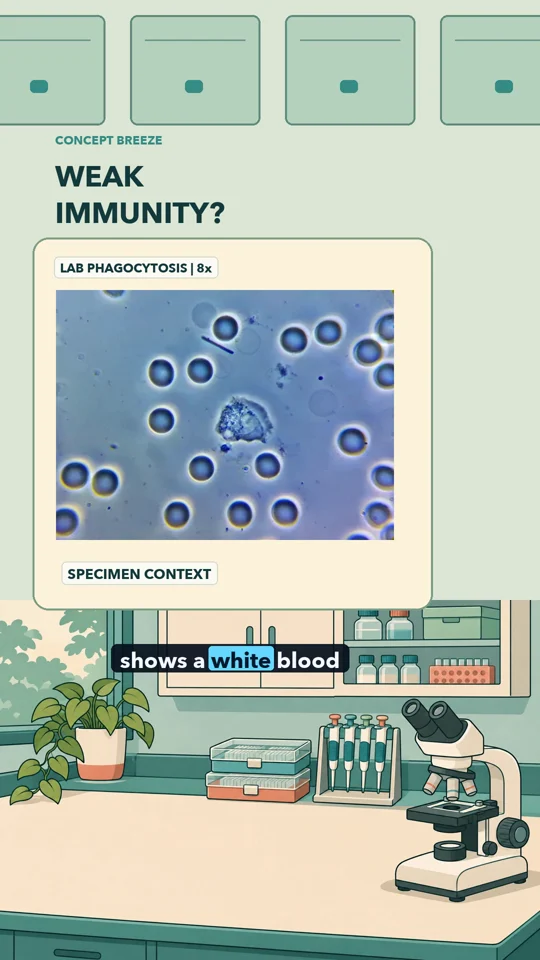
Is Autoimmune Disease a Weak Immune System?
A damaging immune response can be active while targeting the wrong tissue. Understand why autoimmunity cannot be explained with a single strong-or-weak immunity score.
Watch on YouTube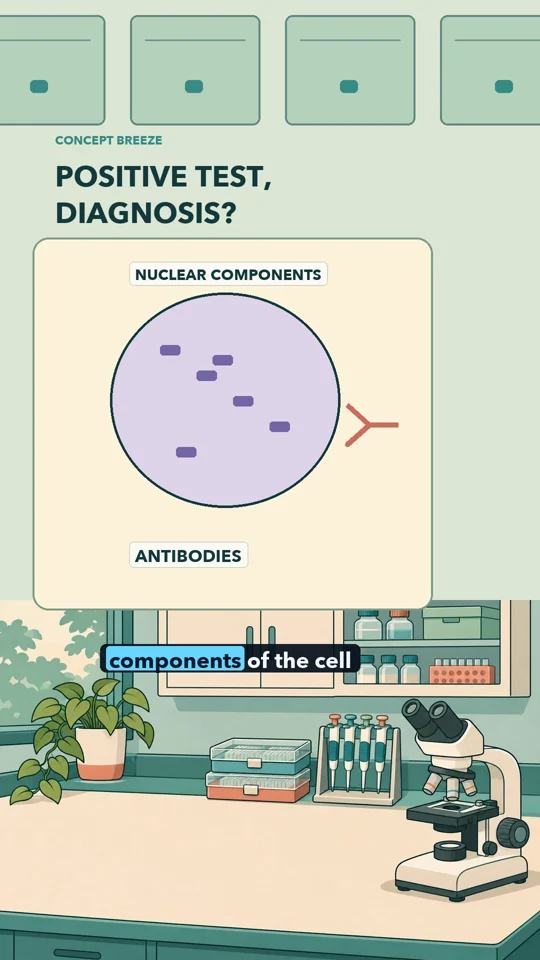
Does a Positive ANA Test Mean Autoimmune Disease?
A positive ANA result is one piece of clinical evidence, not a diagnosis by itself. See why symptoms, examination and the specific disease question matter.
Watch on YouTube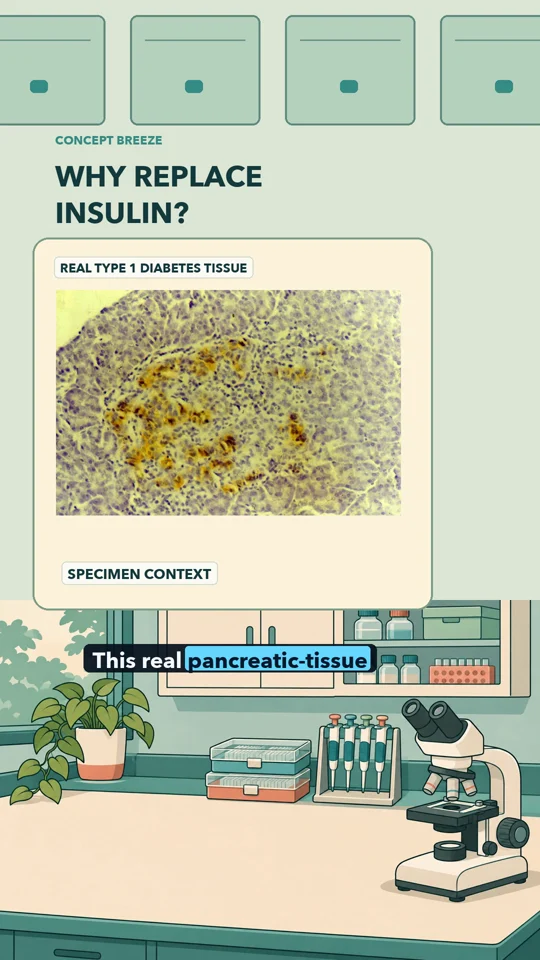
Why Does Type 1 Diabetes Need Insulin?
Type 1 diabetes damages insulin-producing beta cells. Connect the missing hormone to insulin replacement, and distinguish that treatment from stopping autoimmunity.
Watch on YouTubeFollow the reasoning
Sources and further reading
Explore the sources behind the explanation, from the central definitions to the examples and qualifications.
- Autoimmune diseasesNIAMS
- Autoimmune diseases and environmental influencesNIEHS
- Type 1 diabetesNIDDK
- Peripheral immune tolerance: popular informationNobel Committee for Physiology or Medicine
- Autoimmune diseasesMedlinePlus, US National Library of Medicine
- ANA (antinuclear antibody) testMedlinePlus, US National Library of Medicine
- Rheumatoid arthritis: diagnosis and treatmentNIAMS
- Destruction of islets of Langerhans in Type I diabetesAnne Clark, University of Oxford / Wellcome Collection
Images, footage and media credits 3 credits
- Blood-cell photomicrograph, 1974CDC / Dr. Candler Ballard. Public domain; CDC attribution terms. Cropped and resized. Monocyte and lymphocyte context; not an autoimmune diagnosis.
- Pancreatic islet in type 1 diabetesAnne Clark, University of Oxford. Source: Wellcome Collection. CC BY 4.0. Resized for the article; cropped/framed in the video. Labels identify this specimen context.
- Laboratory neutrophil taking up bacteriaAndrei Savitsky. CC BY 4.0. Video excerpts trimmed and framed at native resolution or smaller, original sound omitted, captions added. Original recording is an 8x time-lapse of human blood with added bacteria, not autoimmune disease.