Agreement and implementation
What Does the New UK-EU Deal Actually Change?
The November 2026 UK-EU reset explained: 2028 food-trade and carbon-market targets, youth opportunities by 2030, tuition fees and the implementation process.
What was announced at the UK-EU summit?
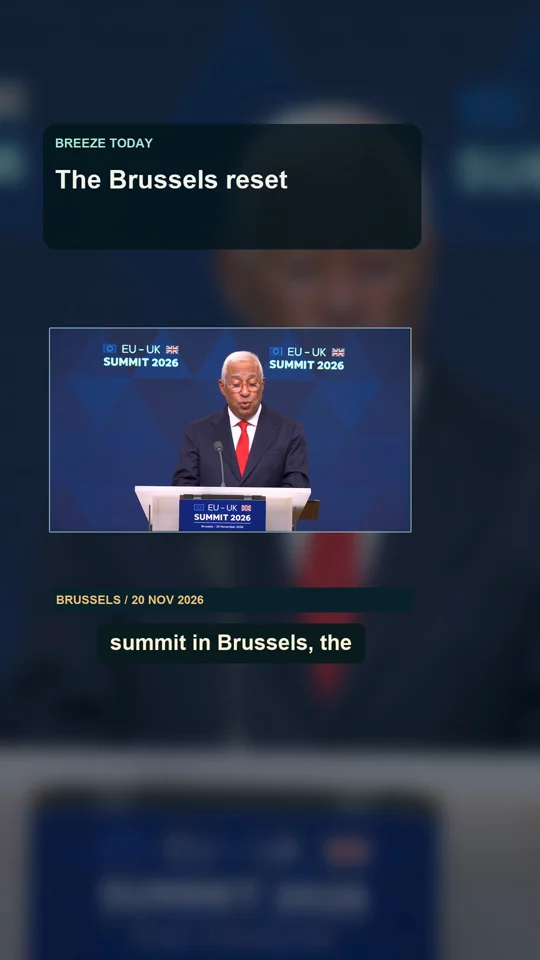
Britain and the European Union held their second summit in Brussels on November 20, 2026. Downing Street said negotiations had concluded on a package covering a youth experience scheme, sanitary and phytosanitary arrangements for food and agricultural trade, and a link between emissions trading systems. The announcement advances the reset launched at the first summit in May 2025. It does not mean every practical change starts on the day leaders meet.
The joint statement records the meeting between Antonio Costa, Ursula von der Leyen and British Prime Minister Andy Burnham and welcomes the conclusion of negotiations on the three agreements. It sets out implementation aims, rather than announcing that the new arrangements are already operating. The agreed text is now available, but completing the legal agreements and making their practical opportunities available remain separate steps.
Read the source Council of the European UnionSky NewsEU Audiovisual ServiceUK Government / EU leaders
Why is there a difference between a deal and implementation?
Political agreement, signature, legal approval and entry into force are different steps. Downing Street told reporters that both sides would work towards implementation and that their respective legal processes would now take place. A person planning to study abroad, or a company preparing a shipment, needs the applicable rules and operative date, rather than a general description of the deal.
The joint statement now supplies concrete aims: applying the SPS agreement from March 1, 2028 and the emissions-trading link from 2028. For the youth agreement, the parties aim to apply it no later than 2028 and endeavour to make opportunities available no later than January 2030. These formulations matter. They describe intended implementation, not applications or new border arrangements starting immediately. Earlier negotiating timetables should not be substituted for this newer agreed wording.
Read the source Sky NewsDefraHouse of Commons LibraryUK Government / EU leaders
See the distinction
One reset, several separate implementation questions
| Workstream | The practical question |
|---|---|
| Food and drink trade | Which requirements change, for which goods, and from when? |
| Youth experience | Who is eligible, under what conditions, and when can they apply? |
| Higher education | Which fee and funding arrangements are actually agreed? |
| Carbon markets | What legal and operational steps link the systems? |
Cabinet OfficeDefraEuropean CommissionCouncil of the European Union
What would the food-trade agreement change?
Sanitary and phytosanitary, usually shortened to SPS, refers to rules protecting human, animal and plant health. The food-trade agreement aims to reduce the checks, certification and paperwork involved in moving relevant goods between Great Britain and the EU. The government also says that, once fully implemented, the arrangement would remove the vast majority of Not for EU labels.
Paragraph 48 of the joint statement aims to apply the SPS agreement from March 1, 2028. It describes the vast majority of relevant animal and plant movements taking place without the certificates or controls currently required. It also envisages extending the benefits to movements between Great Britain and Northern Ireland through the interaction with the Windsor Framework. That is more specific than a general promise of less red tape, but still an implementation aim.
The mechanism involves alignment with relevant EU rules. Defra explains that as those rules change, corresponding rules in Great Britain would update too. Its guidance says the arrangements can affect domestic producers even when they do not trade directly with the EU. The practical question is consequently broader than whether an exporter needs one fewer form: standards, inputs, labelling and supply-chain requirements can matter.
The proposed reduction in friction should not be described as the instant removal of all border controls. The government says existing facilities continue protecting biosecurity until implementation. Nor does an anticipated reduction in business costs guarantee an immediate change in the price of a particular supermarket basket.
Read the source DefraCabinet OfficeUK Government / EU leaders
Does the youth experience scheme restore freedom of movement?
The joint statement describes a scheme allowing 100,000 young people from each side to reside for up to three years for activities including work, study, au-pairing, volunteering and travel, under the respective legal frameworks. The parties aim to apply the agreement no later than 2028 and endeavour to make the opportunities available no later than January 2030. A capped, temporary scheme differs from restoring the general freedom of movement that applied during UK membership of the EU.
The Commons Library traces the proposal through earlier negotiations and the May 2025 commitment to work towards a scheme. Those earlier proposals provide history, while the November 20 joint statement supplies the newer parameters. Prospective participants still need the eventual application arrangements, confirmed eligibility and costs. The youth scheme is also distinct from university tuition arrangements and from Erasmus: permission to stay, course fees and access to an exchange programme answer different questions.
Read the source Cabinet OfficeHouse of Commons LibraryUK Government / EU leaders

Why are university tuition fees still disputed?
Sky News reported that EU officials wanted European students at British universities to pay the same fees as domestic students. Further negotiations were described over a six-month period. The UK said the wider deal was concluded and denied that the other agreements depended on settling university fees. European briefings had suggested that the unresolved issue could affect implementation of the overall package.
That is a material qualification, rather than a reason to assume either that nothing was agreed or that every condition was settled. The two accounts should remain attributed. Until the relevant agreed wording and subsequent decisions establish the position, readers should avoid treating a proposed reduction in tuition fees as an entitlement already available to an applicant.
Paragraph 41 commits both sides to conclude separate tuition-fee negotiations within six months of the summit. It envisages a supplementary agreement covering students from the other side irrespective of their immigration pathway. The statement does not settle a fee level. Paragraph 50, meanwhile, anticipates concluding the SPS, ETS and youth agreements under the respective legal frameworks and their joint and timely entry into force. Readers should keep that agreed language separate from the differing political briefings about conditionality.
Read the source Sky NewsUK Government / EU leaders
How would linking carbon markets work?
An emissions trading system uses tradable allowances to put a price on covered emissions. The European Commission explains that linking compatible systems enables participants in one system to use allowances from the other for compliance. Linking therefore changes the relationship between two carbon markets; it does not abolish the underlying obligation to account for emissions.
Paragraph 49 welcomes the conclusion of negotiations on the link, aiming to apply it from 2028. It envisages mutual recognition of allowances and exemptions for EU and UK goods from the respective carbon border adjustment mechanisms, subject to their laws and procedures. That is a conditional legal mechanism, not a blanket instruction that every charge vanishes immediately. It also does not guarantee that household energy bills fall by a fixed amount.
Read the source European CommissionCabinet OfficeUK Government / EU leaders
What stays outside this reset?
The government's published position rules out rejoining the EU, the customs union and the single market, and rules out a return to freedom of movement for the remainder of this Parliament. Those are the government's political commitments. A set of closer agreements in specific sectors should not be confused with membership of those wider institutions.
There are also trade-offs to assess. Reducing duplicated checks can make trade easier, while alignment affects how rules are set and updated. Temporary youth mobility can open opportunities, while its conditions determine who can use them. A useful assessment considers those concrete arrangements rather than judging the entire relationship from the word reset alone.
Read the source Cabinet OfficeDefraHouse of Commons Library
What should readers watch next?
The next useful evidence is the actual agreements, their legal approvals and official commencement arrangements. The summit statement supplies intended dates, but operational guidance will explain how they affect particular businesses and people. For food businesses, watch sector-specific requirements and transition provisions. For young people, look for confirmed eligibility, costs, application arrangements and permitted activities. For industry, examine the scope and operation of allowance recognition and carbon-border exemptions.
The central answer is that the summit advances closer cooperation in defined areas, with practical effects that depend on implementation. An announced deal and an operational scheme are connected stages, but they are not interchangeable. This explainer is dated November 20, 2026 and preserves the unresolved tuition-fee question rather than treating it as settled.
Read the source Sky NewsDefraEuropean CommissionHouse of Commons LibraryUK Government / EU leaders
How the same announcement affects three different decisions
Consider a food exporter, a young person considering a stay abroad and a university planning admissions. All three may follow the summit, but they need different operational answers. The exporter needs the applicable product requirements and start date. The potential applicant needs eligibility, duration and conditions. The university needs the funding and fee arrangements that apply to its intake.
A headline saying that a package was agreed cannot answer all of those questions at once. Even when political intent is shared, a particular benefit may depend on a further agreement, a legal change, administrative preparation or the start of an application process. The dates discussed in this report are targets attached to particular workstreams, not a single switch turning on every part of the reset.
That is why the useful follow-up document is often narrower than the summit announcement. Product-specific official guidance, scheme rules or an agreed funding text can resolve a practical question that a broad political summary leaves open. The correct document depends on the activity, rather than simply whether someone trades with or travels to the EU.
Read the source Cabinet OfficeDefraHouse of Commons LibraryCouncil of the European Union
How to assess a claimed benefit without treating a forecast as a result
A projected economic benefit is an estimate about a future arrangement. It is not an observed price reduction at a particular shop or a promise that every business saves the same amount. The mechanism matters: reducing a paperwork requirement, linking two markets and expanding a route for people involve different costs, assumptions and implementation steps.
Ask what comparison lies behind the number. Is the claim comparing a proposed arrangement with current rules? Which businesses, transactions or time period are included? What has to be implemented first? These questions do not dismiss a forecast; they identify what would have to be measured later to judge whether the expected benefit appeared.
For this package, keep the food-trade, youth, education and carbon-market tracks distinct. Progress on one does not by itself settle the others. The reporting date above anchors the account of the summit; subsequent practical decisions should be checked against the relevant official rules rather than inferred from a headline about the overall relationship.
Read the source Cabinet OfficeEuropean CommissionCouncil of the European Union
A little more clarity
Questions, answered
Does an announced target date mean applications are already open?
No. A target gives a planned timetable, while an operational scheme also needs rules and an application process. Eligibility, fees and start dates must be checked in the relevant official scheme guidance. A political announcement or proposed year should not be treated as an individual permission to work, study or move.
Cabinet OfficeCouncil of the European UnionHouse of Commons Library
Would a food-trade agreement remove every border requirement?
That does not follow from the announcement. A sanitary and phytosanitary arrangement concerns a particular set of food, plant and animal-health requirements. It should not be described as eliminating every customs, tax or other trading obligation. The applicable requirements depend on the product, the route and the operational agreement.
Why distinguish tuition-fee discussions from the youth scheme?
They concern related people but different policy questions. A route to spend time abroad does not, by itself, establish a university's tuition fee or the funding arrangement for that place. The article separates those issues so that progress on mobility is not mistaken for a settled answer on education costs.
Cabinet OfficeHouse of Commons LibraryCouncil of the European Union
Follow the evidence
Sources and reporting
The original reporting date is shown above. These sources support the reported event and the additional explanatory context; a party’s statement is identified separately from an independent account.
- UK-EU Summit package: factsheet and mythbusterCabinet Office
- UK-EU deal done, insists No 10, despite tuition-fee disputeSky News
- EU-United Kingdom summit, 20 November 2026Council of the European Union
- Food production, plants, animals and associated sectors: preparing your businessDefra
- UK-EU reset negotiations: Youth mobility and opportunitiesHouse of Commons Library
- International carbon marketEuropean Commission
- Second EU-UK summit: opening remarks by Antonio CostaEU Audiovisual Service
- Joint Statement of the European Union and the United Kingdom, November 20, 2026UK Government / EU leaders
Images, footage and media credits 6 credits
The summit image is from November 20, 2026. Other images and recordings are dated context, not evidence that new schemes or border rules are already operating. The companion vertical explanation uses a clearly identified original summit excerpt; other source audio is muted.
- I-298152: Brussels, November 20, 2026European Union / Council of the European Union. CC BY 4.0. Selected excerpts/frame extraction, resized/cropped, dated context, editorial headings and captions. Source audio muted except clearly identified Costa excerpt. Copyright European Union, 2026.
- I-297748: Dublin, November 12, 2026; archive, not summit footageEuropean Union / European Commission. CC BY 4.0. Selected excerpts/frame extraction, resized/cropped, dated context, editorial headings and captions. Source audio muted except clearly identified Costa excerpt. Copyright European Union, 2026.
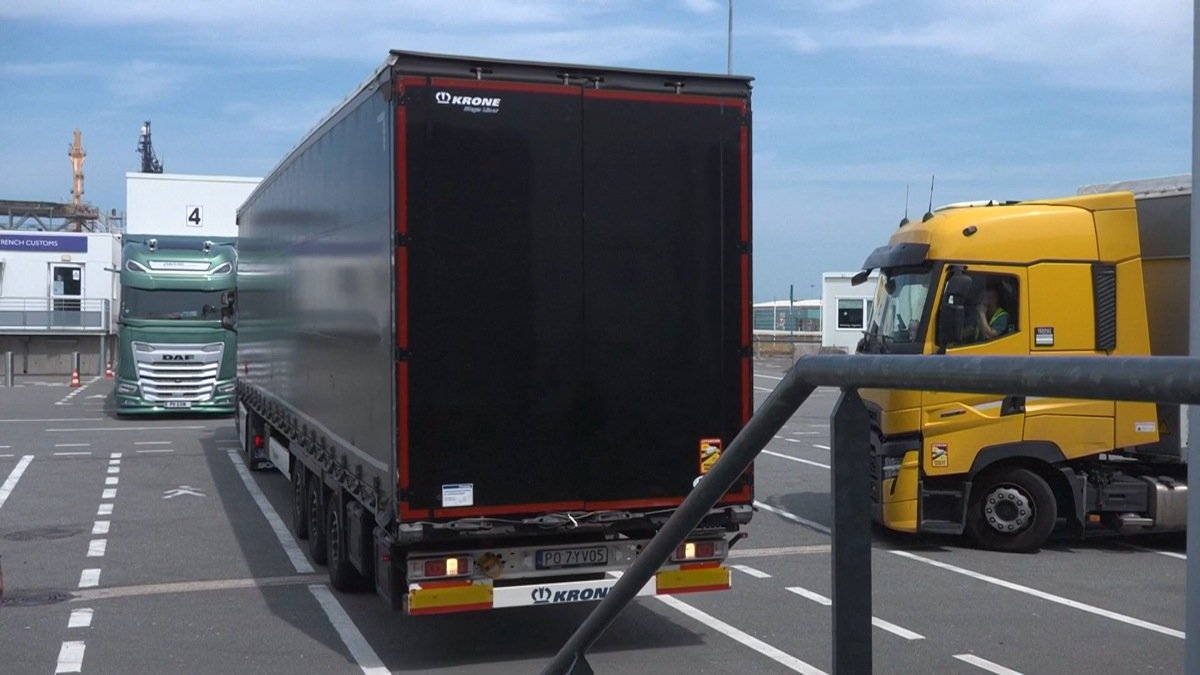
- I-292630: Calais, July 10, 2026; archive, not the new agreement operatingEuropean Union / European Commission. CC BY 4.0. Selected excerpts/frame extraction, resized/cropped, dated context, editorial headings and captions. Source audio muted except clearly identified Costa excerpt. Copyright European Union, 2026.
- I-283813: Rome, February 6, 2026; archive, not beneficiaries of the announced schemeEuropean Union / European Parliament. CC BY 4.0. Selected excerpts/frame extraction, resized/cropped, dated context, editorial headings and captions. Source audio muted except clearly identified Costa excerpt. Copyright European Union, 2026.
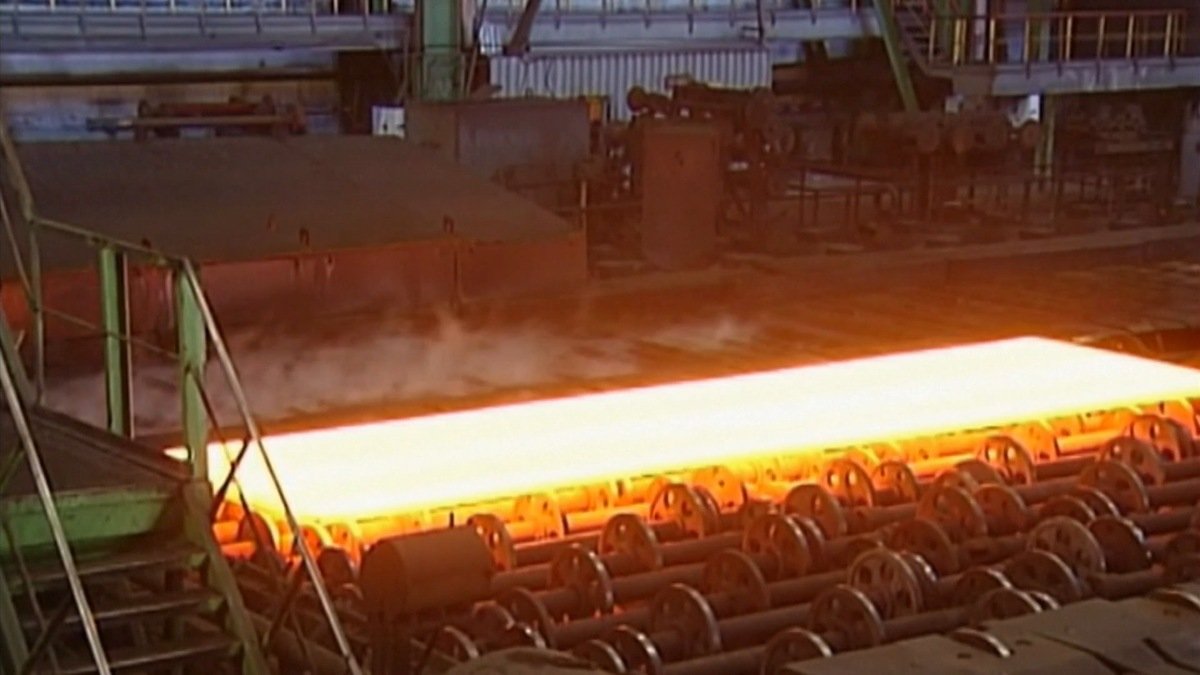
- I-266598: European industrial footage in a 2025 trade infoclip; exclude New York scenesEuropean Union / European Parliament. CC BY 4.0. Selected excerpts/frame extraction, resized/cropped, dated context, editorial headings and captions. Source audio muted except clearly identified Costa excerpt. Copyright European Union, 2025.
- I-285198: Published February 25, 2026; archive, not a vote on this dealEuropean Union / European Parliament. CC BY 4.0. Selected excerpts/frame extraction, resized/cropped, dated context, editorial headings and captions. Source audio muted except clearly identified Costa excerpt. Copyright European Union, 2026.