Weather and engineering
Why Did Macy's Move Its 100th Parade?
Why Macy's moved its 100th parade to November 28: the wind forecast, balloon rules, rope loads and why twice the wind can mean four times the drag.
What changed for the 100th parade?
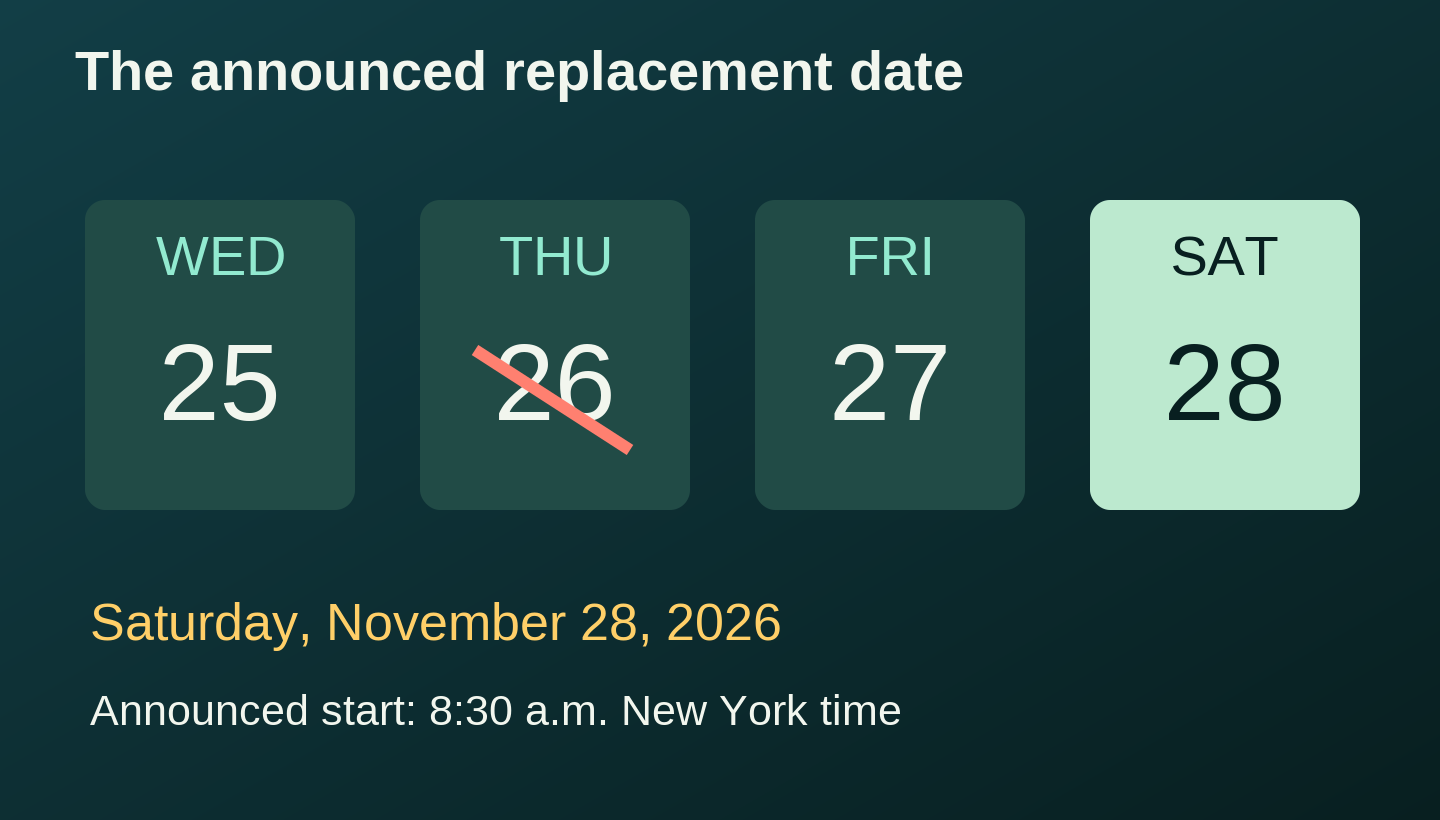
The 100th Macy's Thanksgiving Day Parade was moved from Thursday, November 26, to Saturday, November 28, 2026. New York City's November 25 travel advisory confirms the decision was coordinated with Macy's, the NYPD and other city agencies. ABC News reports an announced start time of 8:30 a.m. in New York. The immediate change is a replacement date, rather than the disappearance of the celebration.
The distinction helps explain the news. An individual balloon can be held down or removed from a procession, while moving the entire event changes the arrangements for a much wider operation. This decision concerns that wider operation. The scientific question underneath the headline is why a giant, apparently weightless character can become difficult to control when air starts moving around it. The answer involves separate upward and sideways forces.
Read the source NYC Emergency ManagementABC News
Why floating does not mean being easy to hold
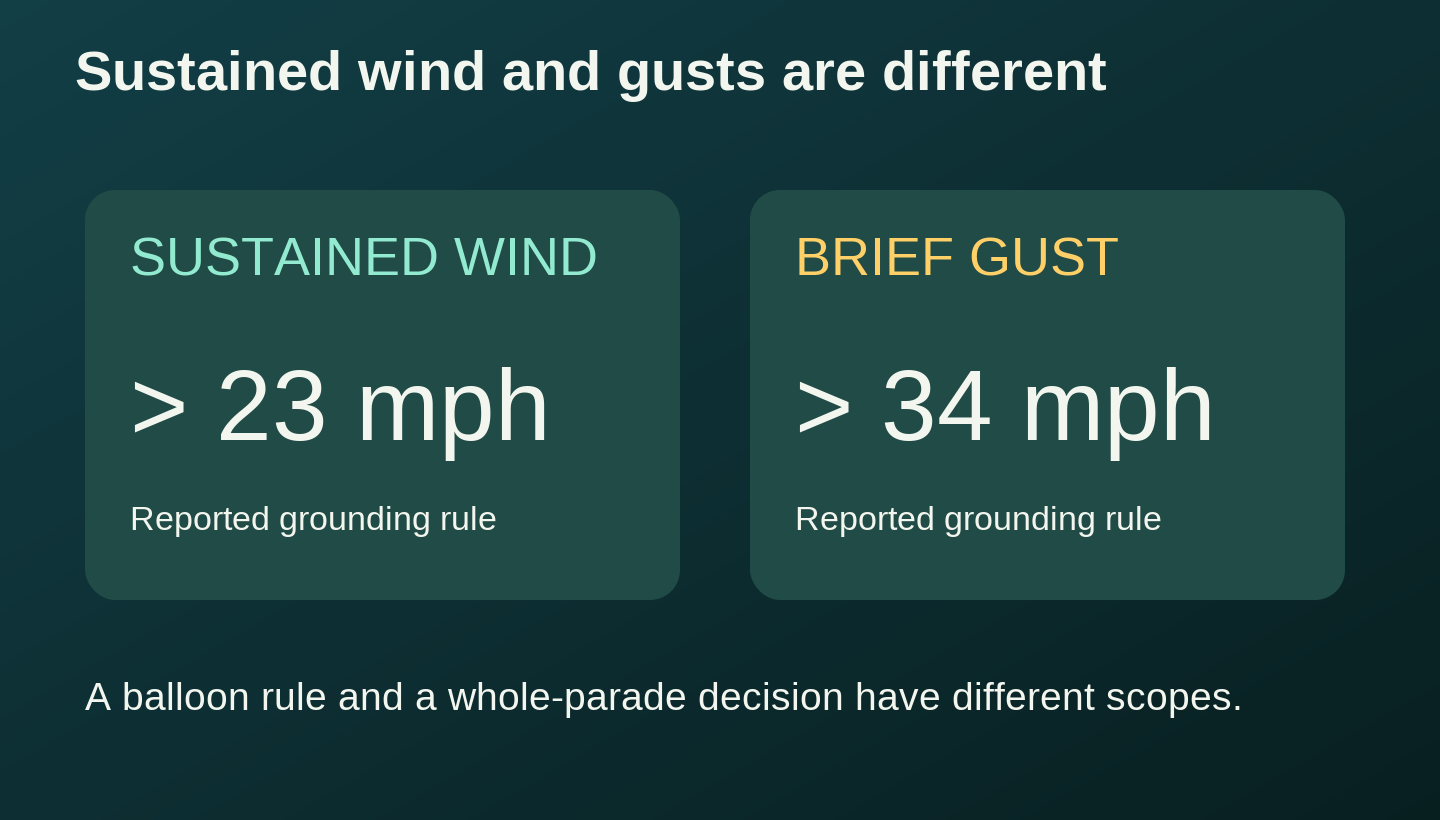
A balloon floats because the surrounding air provides buoyancy. The displaced air has weight, and a sufficiently light balloon-and-gas system can have a net upward tendency. That vertical balance does not make the balloon immune to horizontal airflow. A helium-filled character still presents a large surface to air moving past it. Upward support and sideways aerodynamic load answer different questions.
A useful comparison is a large empty cardboard sheet: being light does not stop it catching the wind. A parade balloon is a three-dimensional, flexible object rather than a flat sheet, so the comparison does not predict its force. It simply separates weight from the effect of airflow. Looking only at whether something can rise leaves out the force that its handlers must resist to keep it in position.
Read the source NASA Glenn Research CenterNASA Glenn Research Center
What a gust changes
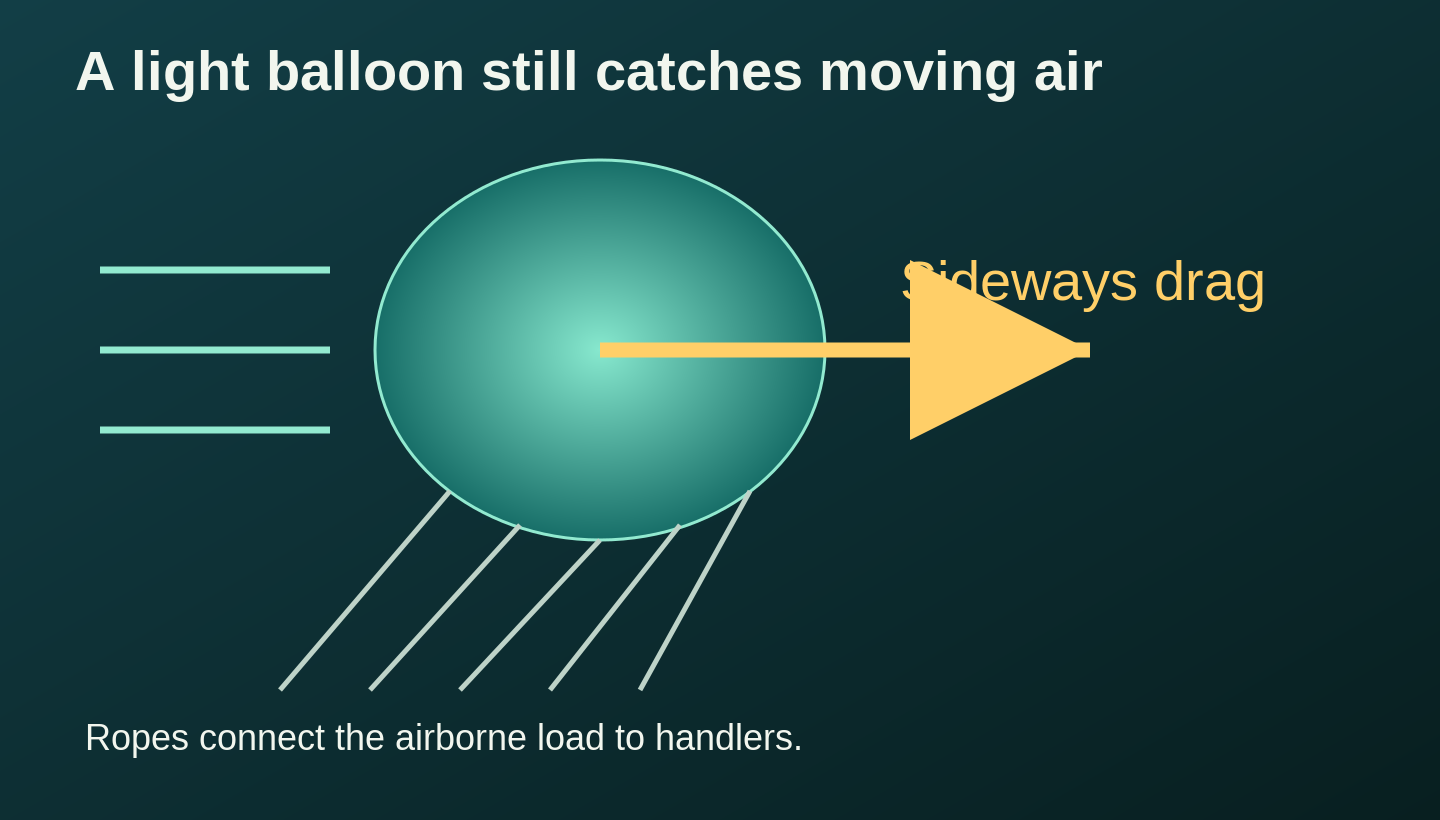
Sustained wind and a gust describe different features of moving air. An average characterizes conditions over a stated interval; a gust captures a shorter increase. Weather products use defined measurement and reporting conventions, so two numbers should be compared with attention to how each was obtained. A moderate average does not imply that every brief part of the same period was equally moderate.
For a tethered object, a brief increase matters because the load can change faster than a walking team can conveniently reorganize. A wind-speed average is therefore not a complete description of the handling problem. The relevant questions also include peaks, changes in direction and the object being controlled. This explains why a balloon policy can have both a sustained-wind condition and a separate gust condition without those two conditions being contradictory.
Read the source National Weather Service
The reported balloon rules are not the whole event decision
Public reporting describes New York's giant-balloon grounding thresholds as sustained winds above 23 miles per hour or gusts above 34 miles per hour. These are two reported operational thresholds, not an equation for the force on a particular character. They should not be averaged together, treated as interchangeable measurements or read as a promise that every lower wind speed is suitable for every balloon.
A rule about a giant balloon also does not, on its own, explain the disposition of every float, performer, road closure and spectator area. Grounding an attraction and rescheduling a whole procession are different decisions. The city and organizers chose the latter for this event. Keeping the levels separate avoids turning one memorable pair of numbers into a complete account of the planning judgment.
Read the source ABC NewsNYC Emergency Management
Why doubling wind can mean four times the drag
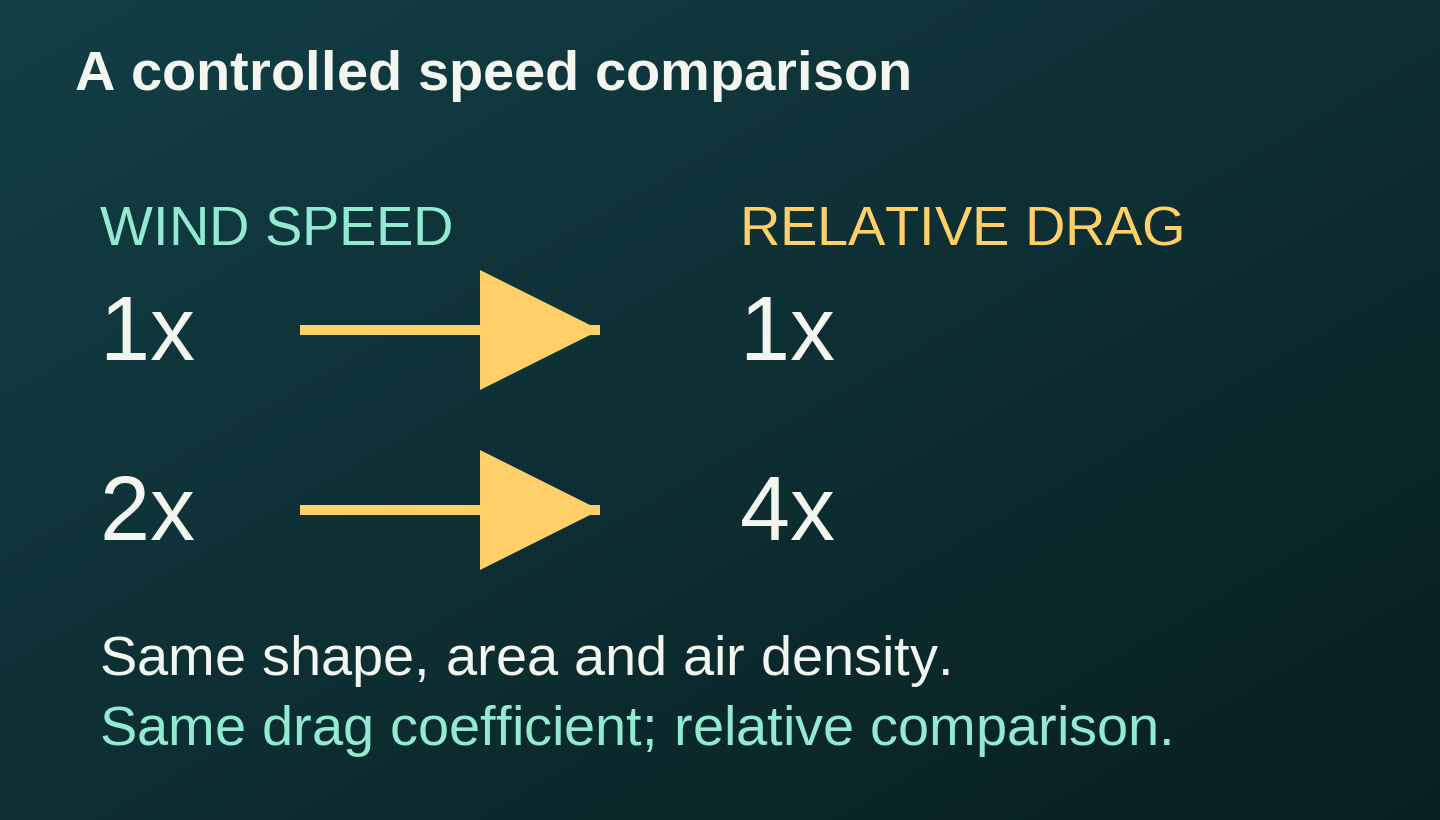
NASA's drag equation relates aerodynamic drag to air density, reference area, a drag coefficient and the square of the relative air speed. For a controlled comparison in which density, area, shape and the relevant coefficient are held fixed, the speed ratio is squared. A speed multiplier of two therefore corresponds to a drag multiplier of four. The relationship is nonlinear: twice the speed does not mean just twice the load.
The numbers in the comparison below are independently calculated ratios, not measurements from the parade. At 1.25 times a starting speed, the squared-speed factor is 1.5625, or about 1.56. At 1.5 times the speed, it is 2.25. These worked examples isolate one variable. They help a reader understand why a seemingly modest increase in speed can have a larger effect on load without pretending to calculate the force on a real balloon.
Read the source NASA Glenn Research Center
See the distinction
How speed changes the controlled drag comparison
| Relative air speed | Relative drag |
|---|---|
| 1.00x | 1.00x |
| 1.25x | 1.5625x |
| 1.50x | 2.25x |
| 2.00x | 4.00x |
Original worked examples: same reference area, air density and drag coefficient. These are not measured balloon forces.
Why that equation cannot give this balloon a force in newtons
A numerical force estimate would require more than a weather forecast. It would need an appropriate air speed at the object, its relevant area, air density and a defensible aerodynamic coefficient for its shape and orientation. A character balloon does not remain an ideal rigid shape. Its projected area can change as it turns, and the airflow and the surrounding environment are not fixed simply because a convenient comparison holds them fixed.
There is also a difference between the amount of surface fabric and the reference area used in an aerodynamic calculation. The chosen area and coefficient must be consistent. Guessing one from a photograph and combining it with an unrelated coefficient could produce an impressive-looking number with little evidential value. The animation therefore preserves one shape and reports relative change. It does not assign an invented weight, wind reading or force to any named character.
Read the source NASA Glenn Research Center
The ropes connect the airborne load to people
The balloon, its tether points, the ropes and the handlers form a connected mechanical system. Tension acts along a rope; a rope is not a rigid bar that can push back in any chosen direction. The geometry of the connections affects how a sideways load is transferred toward the people below. That is why the explanatory drawing keeps its ropes attached to the same balloon surface and hand positions as the airflow changes.
It would be equally misleading to assume that counting visible handlers tells us the force on each person. The loads need not be shared evenly, and the camera does not reveal every attachment or the complete operating plan. The actual test footage is useful because it shows coordinated rope handling. The separate diagram is useful because it makes a force path easier to follow. Each contributes something different; neither establishes what a team experienced during the forecast storm.
Read the source NASA Glenn Research CenterMacy's External Communications
Read the November 25 forecast as a forecast
The city's November 25 advisory forecast morning gusts of 40 to 45 miles per hour, with the strongest conditions expected later on Thursday. It also identified heavy rain and coastal flooding as concerns. These statements describe the information available for planning before the event. They are not a record of wind measured at a specific point on the parade route.
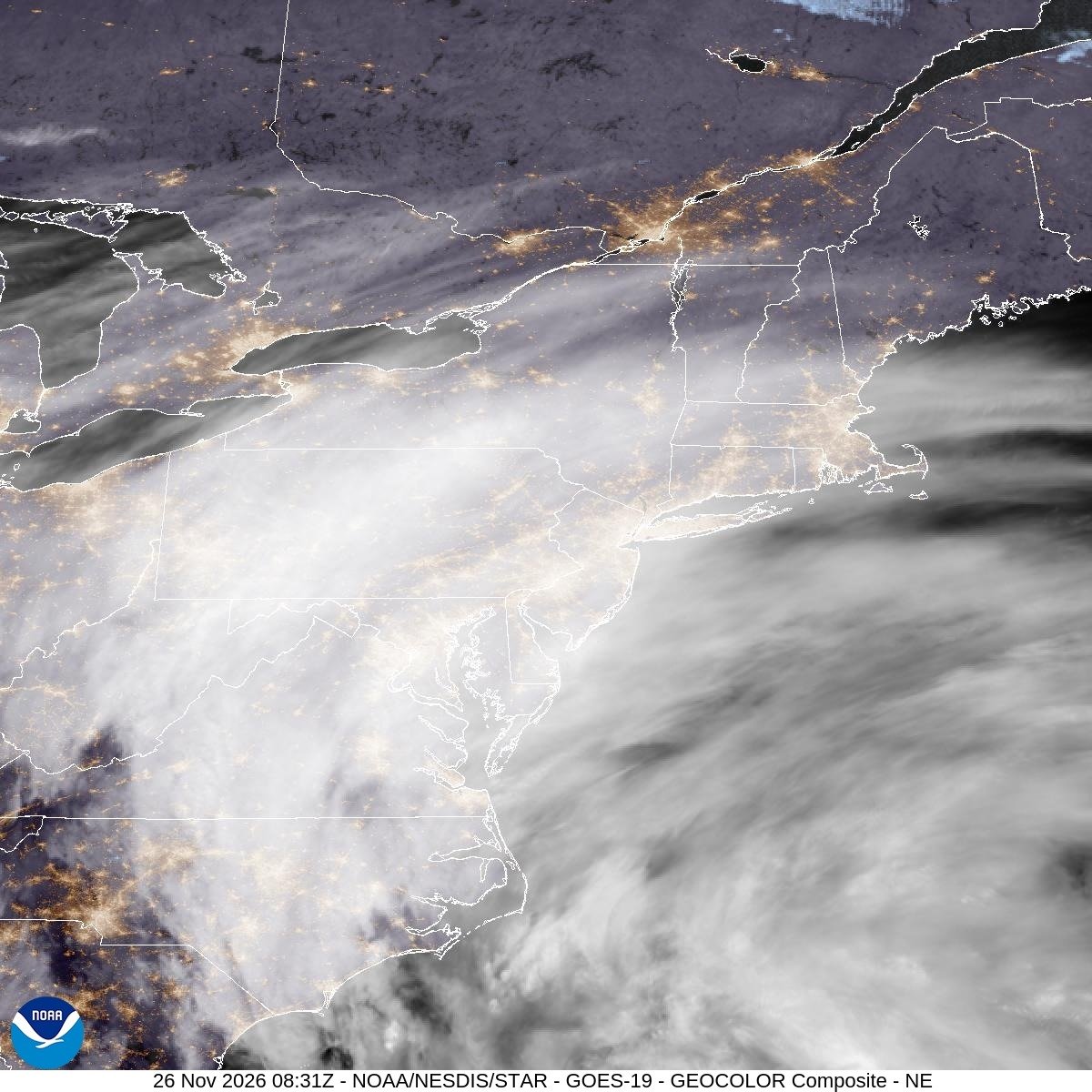
Our accompanying NOAA image sequence shows actual cloud observations from November 26. A satellite cloud picture provides regional context, but its brightness and movement are not a ground-level wind-speed gauge. The dated forecast label and the observed image timestamps therefore have different jobs. One reports an official expectation; the other identifies when the underlying cloud image was captured. Combining them should not erase that distinction.
Read the source NYC Emergency ManagementNOAA/NESDIS/STAR
What the different pictures actually show
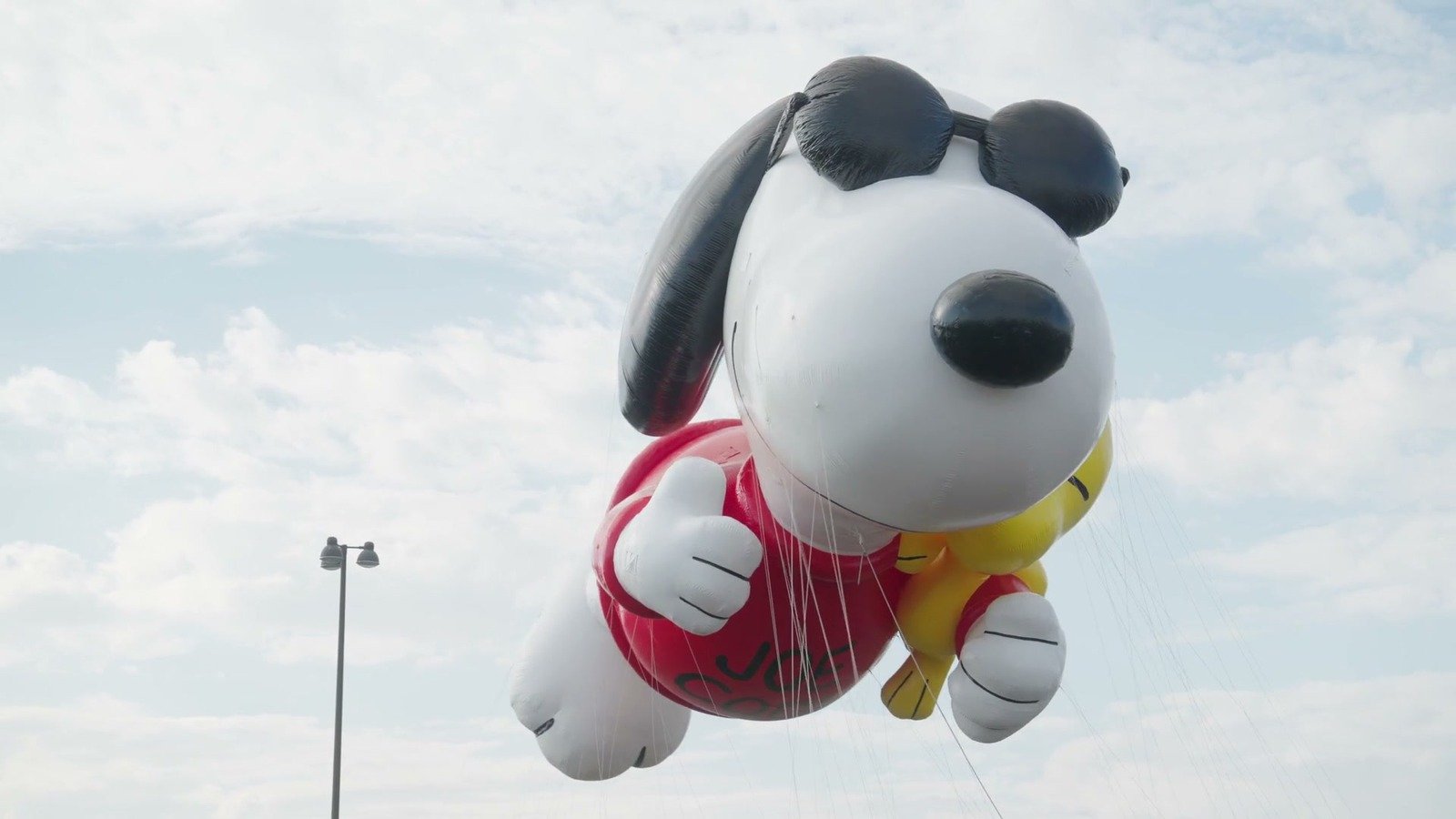
The balloon footage comes from Macy's November 7 outdoor trial at MetLife Stadium in East Rutherford, New Jersey. It shows preparations for this year's parade, including different balloon viewpoints and real rope handling. The float footage comes from the November 17 studio preview in Moonachie, New Jersey. Those are relevant preparations, with their own dates and locations, rather than pictures of a Thursday procession that took place after the postponement.
The overhead photograph of costumed performers is Anthony Quintano's November 24, 2022 parade image. It supplies clearly dated context for one of the roles in a larger parade. The NOAA sequence is a separate current observation source. The distinction is part of the explanation: a preview, an archive image, a cloud observation and an original force diagram should remain identifiable even when an edit places them next to one another.
Read the source Macy's External CommunicationsMacy's External CommunicationsAnthony QuintanoNOAA/NESDIS/STAR
The next date is an announced plan
The announced replacement is Saturday, November 28, with the reported start time of 8:30 a.m. in New York. The calendar illustration preserves the actual weekdays: November 25 is Wednesday, the original November 26 date is Thursday, and November 28 is Saturday. That makes the date change explicit without relying on relative expressions that will become confusing after an upload.
For anyone deciding whether to attend or watch, the organizer's current event page is the place to check for subsequent changes. A dated article can explain an announcement and its reasoning without treating a future schedule as an event that has already happened. Likewise, the fact that a stronger-weather period was forecast later in the day does not by itself mean that all earlier preparations or travel arrangements were free of concern.
Read the source ABC NewsMacy'sNYC Emergency Management
What this story helps us understand
The useful lesson is a distinction between flotation and control. A buoyant object still interacts with moving air. Its shape, projected area, changing orientation and connections to the ground affect that interaction. A second distinction separates a balloon-specific operating rule from the decision to coordinate an entire public event. A third separates a forecast used to plan from measurements taken afterward.
Those distinctions keep the explanation tied to the evidence. We can report the new date, show dated preparations, and demonstrate the squared-speed relationship without manufacturing a dramatic incident. The rescheduling is the verified development. The force comparison explains one part of the handling challenge. The next official updates will determine the practical details of the replacement event.
Read the source NYC Emergency ManagementNASA Glenn Research Center
A little more clarity
Questions, answered
Is the parade cancelled?
The announcement moves it to Saturday, November 28, 2026. That is a replacement plan. Check the official event page for subsequent changes and current viewing or attendance details.
Why not just add more handlers?
Counting people does not determine the load on every rope or person. Attachment geometry, the way a balloon turns and changes shape, and operational coordination all matter. The original force illustration explains the load path without inventing the staffing plan for any particular balloon.
Does the satellite image show the exact wind on the route?
No. The selected GeoColor imagery shows observed clouds and surface context at its timestamp. The morning gust figures are a separate city forecast issued onNovember 25. A cloud picture is not a substitute for a wind measurement at a specific street location.
Follow the evidence
Sources and reporting
The original reporting date is shown above. These sources support the reported event and the additional explanatory context; a party’s statement is identified separately from an independent account.
- Thanksgiving travel advisory and parade move, November 25NYC Emergency Management
- Parade rescheduled, with announced Saturday start timeABC News
- Reported sustained-wind and gust rulesABC News
- Drag equation, coefficient and reference areaNASA Glenn Research Center
- Archimedes principle and buoyancyNASA Glenn Research Center
- Wind reporting terminologyNational Weather Service
- Outdoor balloon test media release, November 7Macy's External Communications
- Float-preview media alert, November 17Macy's External Communications
- GOES-19 northeast GeoColor observationsNOAA/NESDIS/STAR
- Parade photograph, November 24, 2022; CC BY 2.0Anthony Quintano
- Current event informationMacy's
Images, footage and media credits 3 credits
Cover and silent balloon excerpts: official outdoor trial, November 7, 2026. Float excerpts: official studio preview, November 17, 2026. Performer photograph:November 24, 2022archive. NOAA sequence:observations fromNovember 26, 2026. None of the preview/archive material is presented as footage of Thursday storm conditions.
- 2026 balloon-test and float-preview press footageMacy's External Communications; individual camera operators not supplied. Official editorial press media supplied with event releases. Selected silent excerpts and stills; crop/resize; actual7/17 November event dates retained.
- 2022 parade performers photographAnthony Quintano. CC BY 2.0. Cropped/resized archive photograph in a visibly separated multi-role video composite.
- GOES-19 northeast observationsNOAA/NESDIS/STAR. US federal satellite observations. 48 actual frames sequenced in time order; resized; no estimated cloud interpolation.