Unstable explosives. Two separate questions.
Why Did the US Army Blow Up Nearly Five Tons of Explosives?
Why the Army detonated degraded lead azide in Iowa, why moving the drums was dangerous, and what EPA's initial airborne lead monitoring does and does not establish.
What happened at the Iowa Army Ammunition Plant?
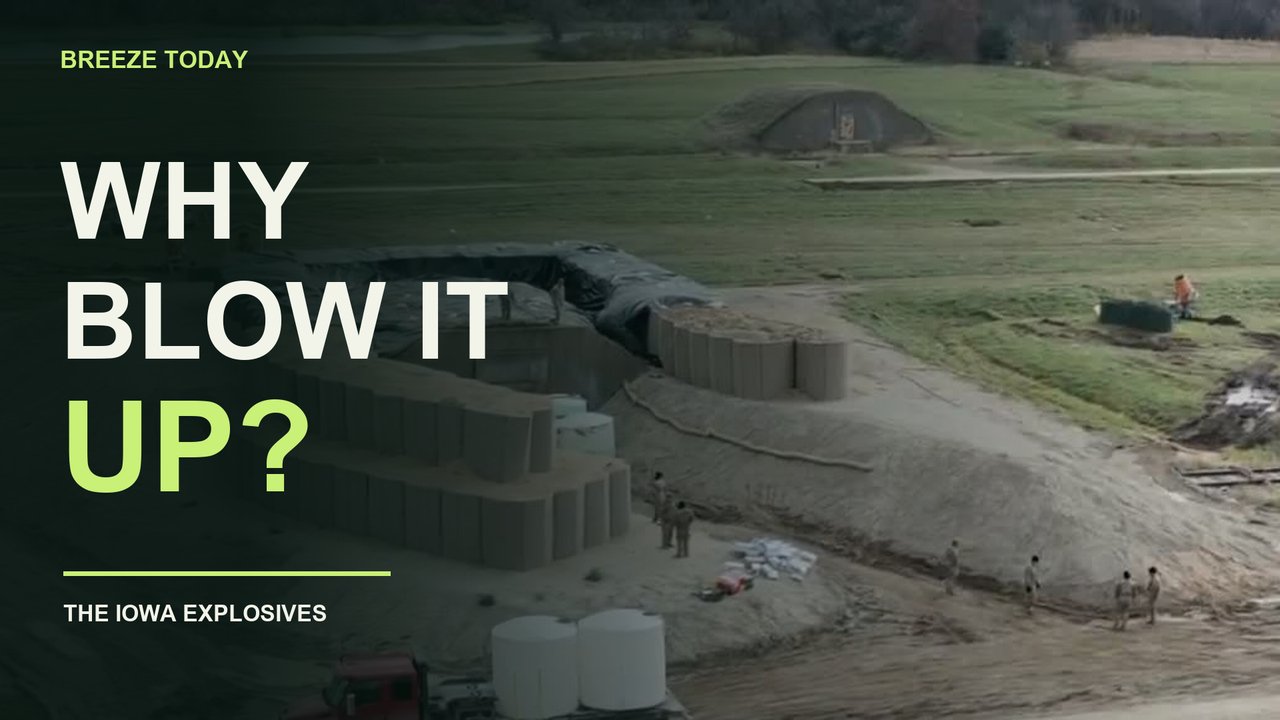
The U.S. Army carried out a controlled detonation of a deteriorating lead azide stockpile at the Iowa Army Ammunition Plant near Middletown on November 25, 2026. The operation followed warnings that the material could explode unintentionally if it continued to degrade or was disturbed. Independent reporting described the detonation as completed, while officials began assessing the site and environmental measurements. The event was the deliberate disposal of hazardous explosive material, rather than an attack or an accidental explosion.
The most useful way to understand the story is to separate two outcomes. One is whether the operation eliminated the unstable explosive stockpile. The other is what happened to the lead contained in that material. A successful disposal operation does not, by itself, answer every environmental question. Equally, the existence of a potential lead hazard does not establish that a particular community received a harmful exposure. Both conclusions require evidence appropriate to the question.
Why was the stockpile described as nearly five tons?
In its November 24 briefing, the Army described approximately 68 drums with more than 9,700 pounds of net explosive weight. Dividing 9,700 pounds by 2,000 pounds per U.S. short ton gives 4.85 short tons, which explains the commonly used description of nearly five U.S. tons. The same quantity is about 4.4 metric tonnes. These are different units for the explosive material, not competing measurements of the amount of lead deposited outside the plant.
Lead azide is a compound containing lead and nitrogen. The stockpile figure therefore should not be rewritten as five tons of pure lead. Nor does the weight of material in storage tell us how much became airborne, how much remained at the disposal site or what reached any specific property. Those are separate measurements. Keeping the material, units and location attached to each number prevents a dramatic headline from becoming an unsupported estimate of contamination.
Read the source U.S. ArmyU.S. Army
Why did the Army say it could not simply move the drums?
The Army said a routine inspection found partial crystallization and that the decades-old material had undergone severe degradation. Its briefing described accumulated crystals on the exterior of barrels and their lids. Specialists said the resulting material was highly sensitive to friction, shock and changes in temperature. In that condition, handling a barrel or opening its lid could become a trigger for the very accident that disposal was meant to prevent.
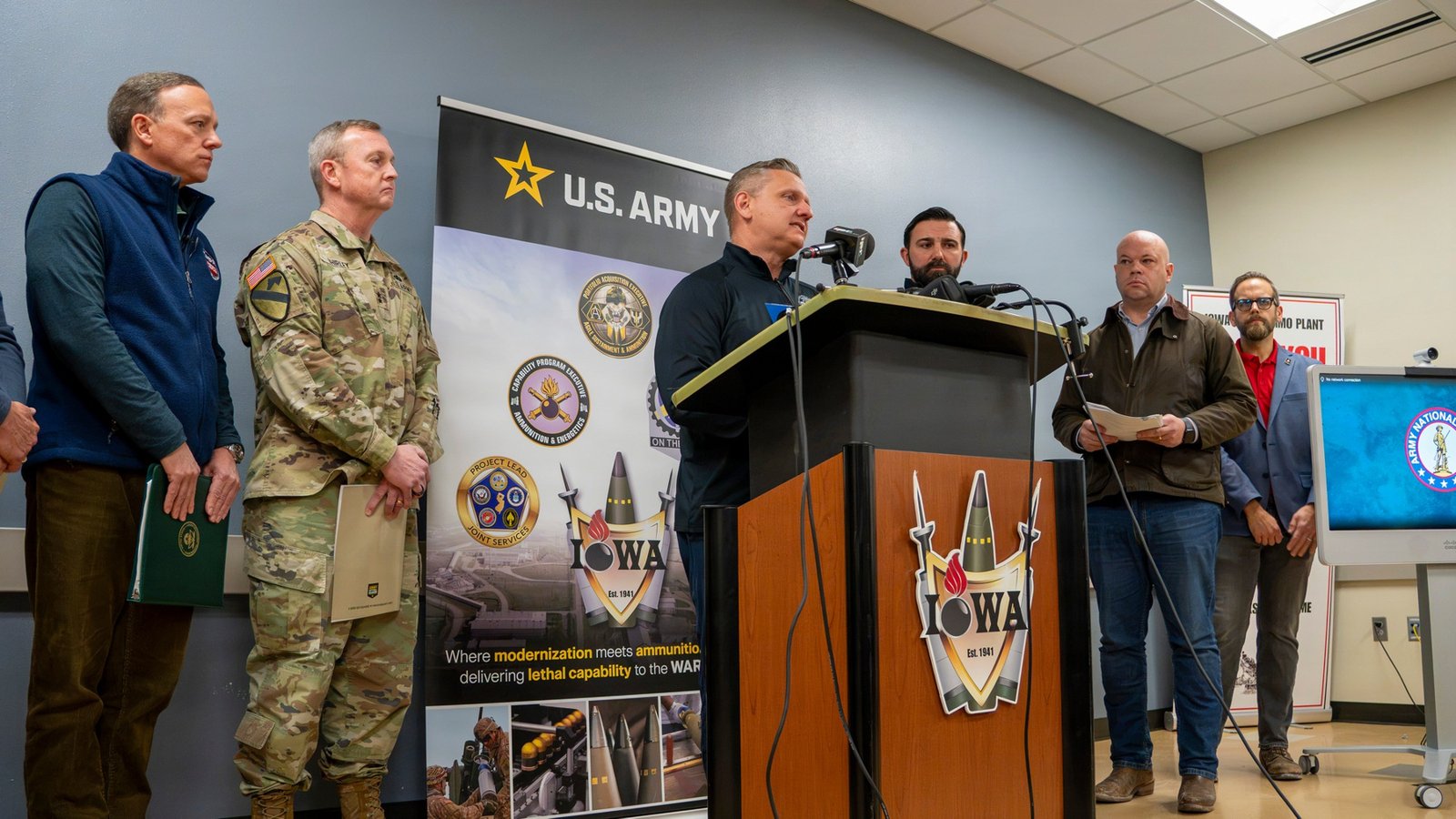
Moving hazardous material is often a sensible first instinct. Here, however, the Army said movement, opening and treatment were constrained by the same instability. It reported evaluating alternatives before choosing an in-place controlled detonation. That is the stated technical rationale, not a claim that detonating hazardous material is generally preferable to treatment. The decision depended on this stockpile, its deteriorated condition and the risks of accessing it. Assistant Secretary Jordan Gillis explained the distinction between an uncontrolled explosion and a prepared operation.
Read the source U.S. ArmyU.S. ArmyU.S. Army / delivery via KXII
What could a planned operation change?
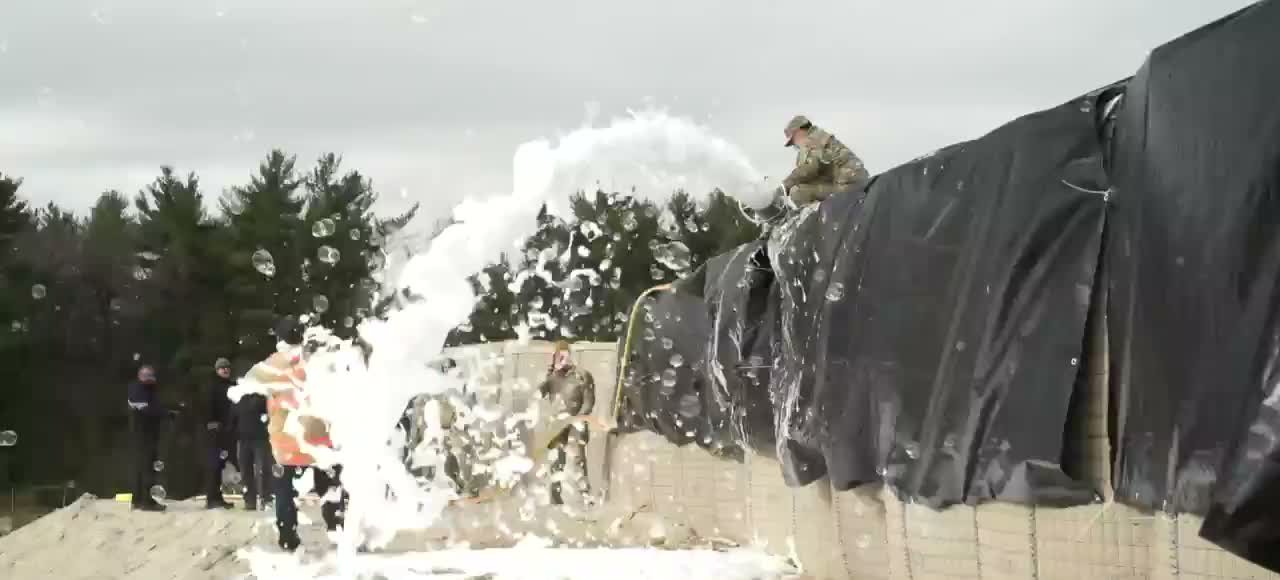
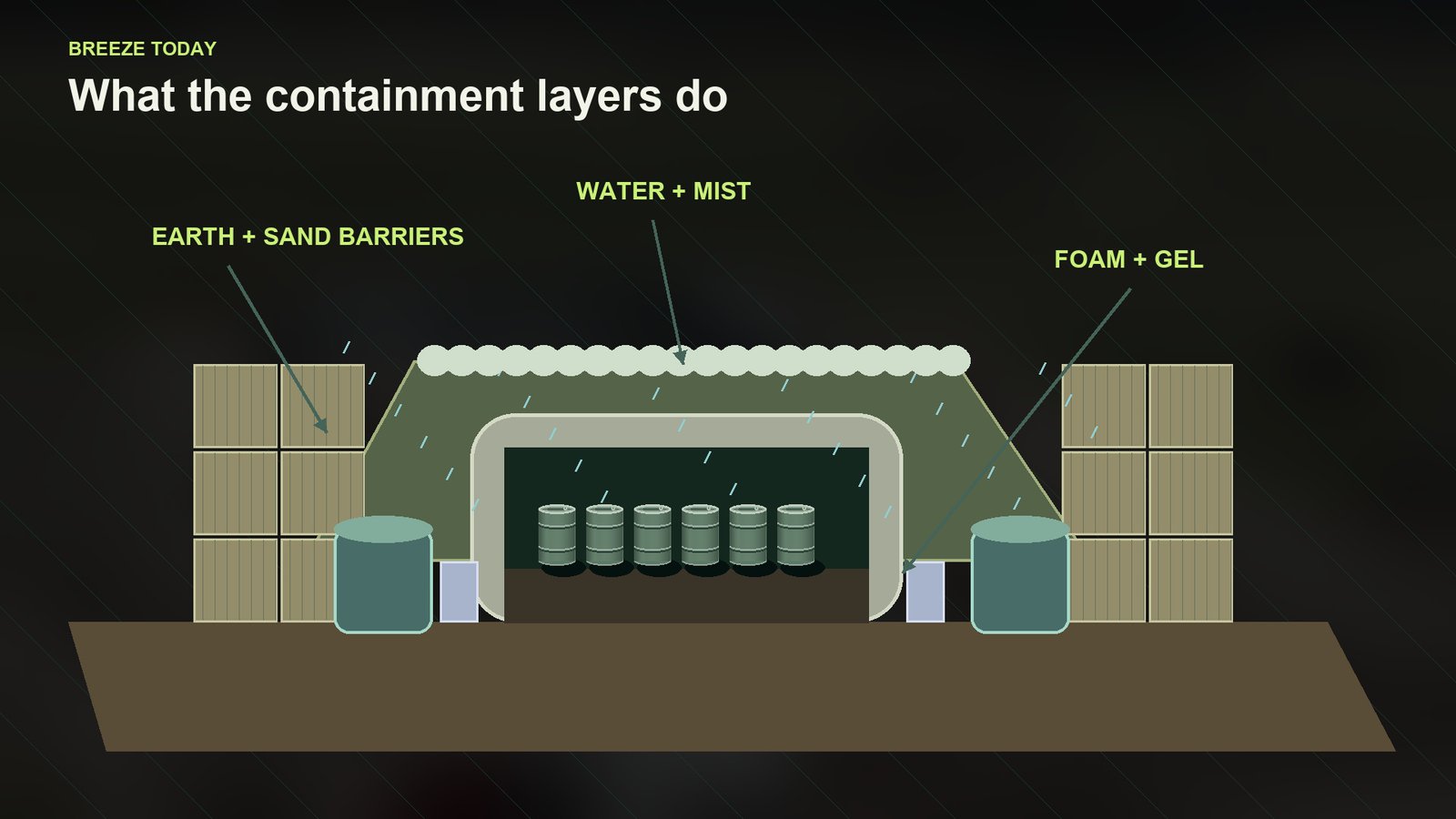
A planned operation allowed personnel to prepare the surroundings, select the timing and position protective equipment before the detonation. The Army described earth berms and sand-filled barriers around the storage structures, along with water application, misting, foam and gel blocks. These measures were intended to reduce blast effects, intercept debris and limit the escape of lead-containing particles. They addressed different parts of the problem rather than acting as one universal protective wall.
The illustrations accompanying this article explain the roles of those layers. They are simplified cross-sections based on the published description, not construction drawings or a forecast of the actual plume. Barrier dimensions, airflow, weather, particle characteristics and the operation itself affect real performance. Showing a smooth animated path over a neighbourhood would imply a level of site-specific modelling that an editorial diagram does not possess. Actual measurements are needed to test how the precautions performed.
Read the source U.S. ArmyU.S. ArmyU.S. EPA
Why did lead dust remain a concern?
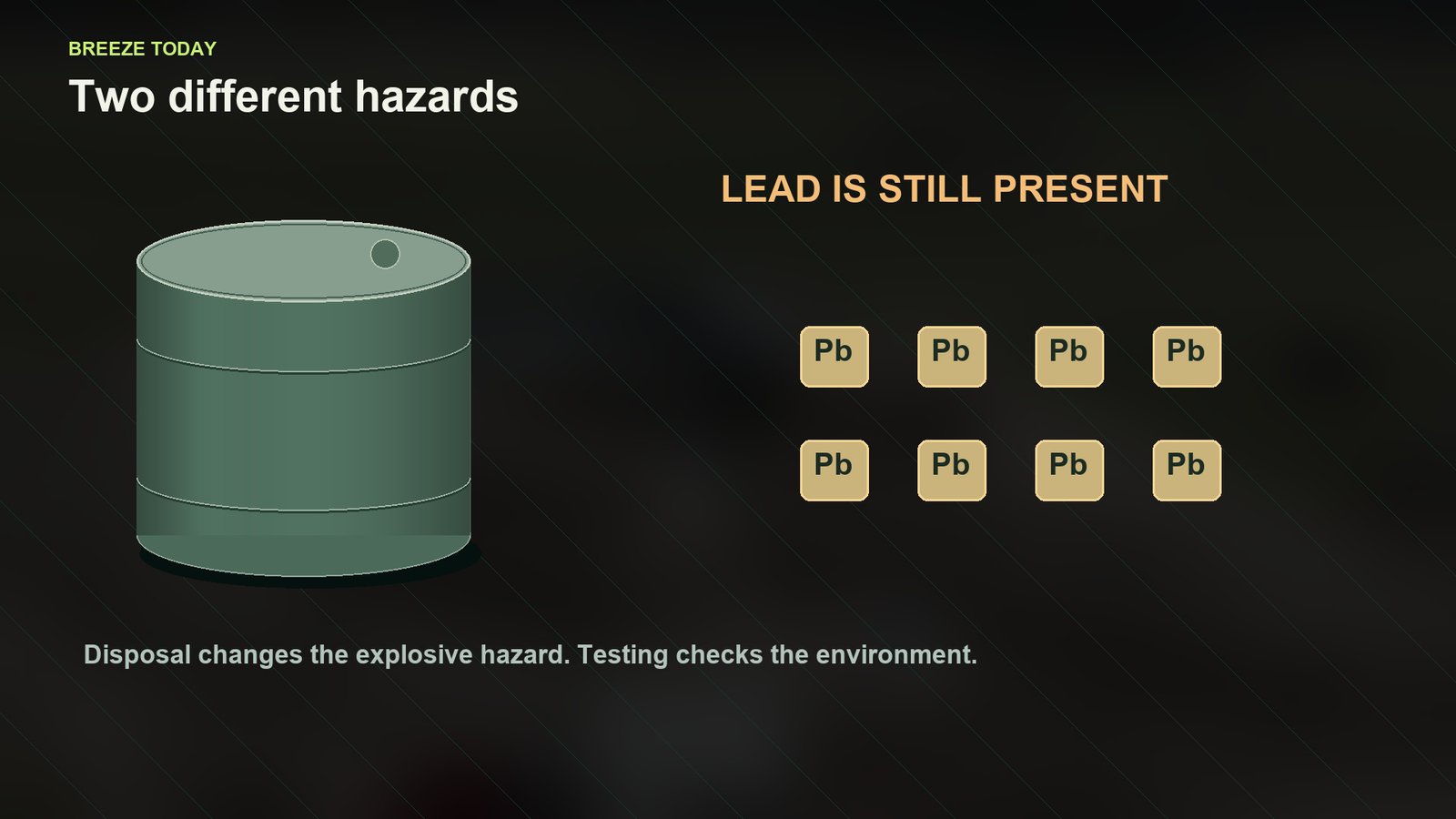
Lead is an element, so eliminating the explosive properties of a compound does not make the lead atoms cease to exist. The public concern was that the operation could create fine lead-containing particles, some of which might escape containment and settle on surfaces. The Army acknowledged the need to control particulate release and described follow-up environmental sampling and remediation provisions. The relevant question was the amount, form and location of any released lead, rather than whether the explosive had stopped being dangerous.
Lead exposure can affect multiple body systems, and children are particularly vulnerable. That context explains why residents and public officials were concerned about homes, farms, schools and water, even when the detonation itself was conducted on a military installation. It does not establish that a harmful exposure occurred at any one of those places. Readers seeking current local instructions should use the dated notices of the responsible agencies, because a general explainer cannot determine the conditions at an individual address.
Read the source U.S. ArmyU.S. EPAABC News
What were the 1,216 baseline samples?
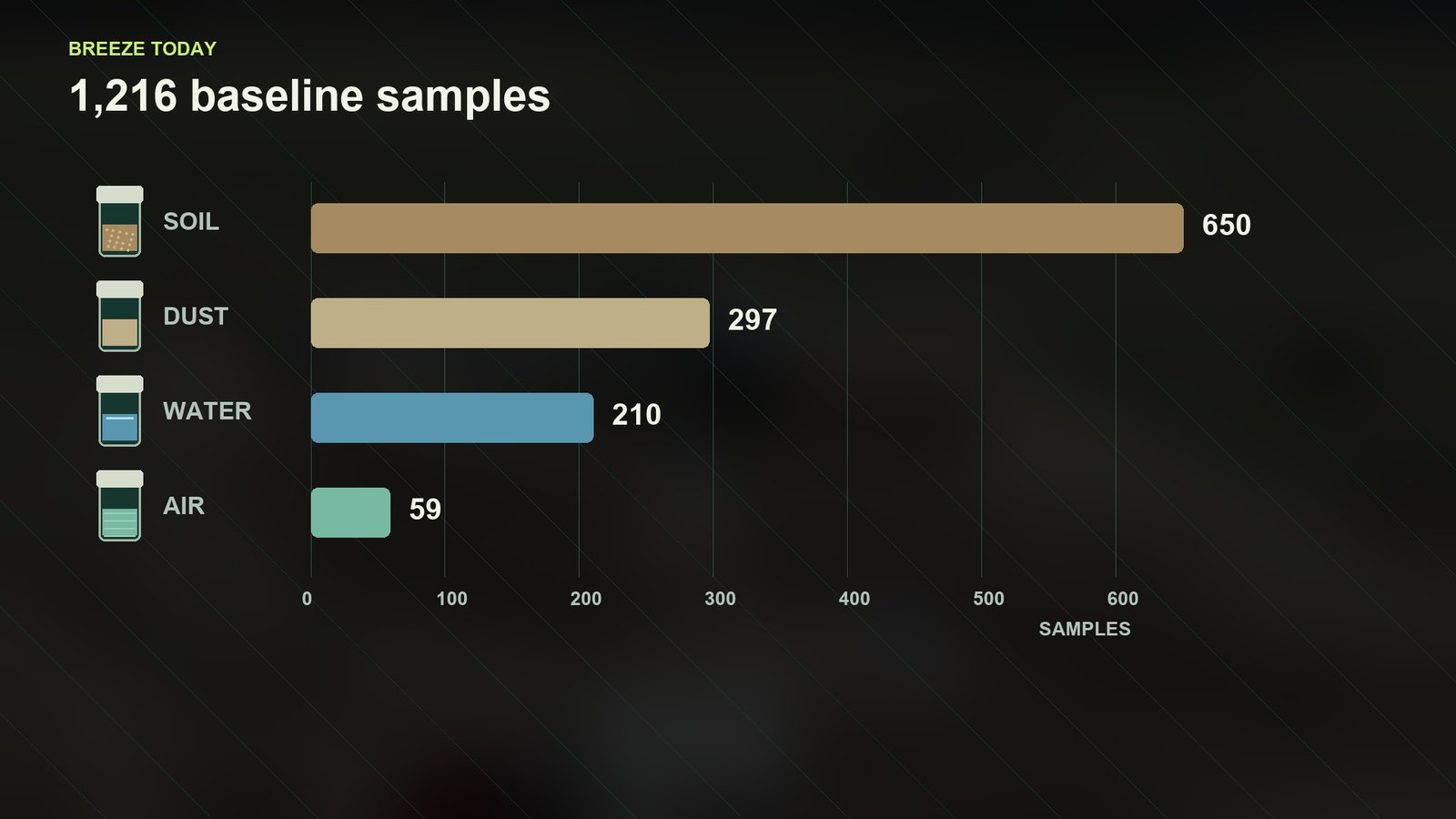
Before the detonation, EPA published a table containing 650 soil samples, 297 dust samples, 210 water samples and 59 air samples. These add to 1,216. The agency described them as pre-event measurements and also announced continued sampling during and after the operation. A baseline helps establish what was present before the event, so later results can be assessed against earlier conditions rather than interpreted in isolation.
The four categories are not interchangeable. An air measurement describes material captured or detected in air under the conditions of that measurement. A soil or dust sample concerns material on or in a different medium, and a water sample answers another question again. The table is a count of samples, not a count of affected people, positive findings, monitoring stations or contaminated properties. More samples in one category also do not necessarily mean that category was more contaminated.
Read the source U.S. EPA
What did EPA mean by no airborne lead detected?
In a November 25 release, EPA said that all its real-time air monitors were reporting zero detection of airborne lead one hour after the controlled detonation. It said its monitors had continued collecting data throughout the event. That early observation matters: a responsible account should include reassuring measurements as clearly as it describes the risks that prompted monitoring.
The wording also has a scope. It is an agency report about those real-time air monitors at an early stage of the response. It should not be expanded into a completed finding about every soil, water and surface sample, every location or every later period. The same release said extensive monitoring and sampling would continue. Describing that limitation accurately does not reject the initial result; it preserves the question that the result actually answers.
Read the source U.S. EPAU.S. EPA
See the distinction
Different evidence answers different questions
| Evidence | What it can tell us | What it cannot establish by itself |
|---|---|---|
| Stockpile inventory | Material stored before disposal | How much lead reached a home |
| Preparation footage | Visible containment work at the site | Measured offsite exposure |
| Real-time air monitors | Reported airborne readings for monitored conditions | Every soil or water result |
| Baseline samples | Conditions before the operation | The entire post-event outcome |
| Follow-up sampling | Findings for the tested medium, place and time | An unmeasured location or period |
Why is a visible cloud not a laboratory result?
Images can establish that a plume or cloud was visible, but ordinary video does not measure its chemical composition or the concentration at a particular location. The Army described multiple materials involved in containment, including soil, sand, water and foam. A visible cloud therefore cannot be treated as a direct map of lead concentrations. Its dramatic appearance is not a substitute for sampling.
The reverse mistake is also possible. A cloud becoming less visible does not, by itself, establish that all particles have disappeared or that every surrounding surface is unaffected. The sound, size and apparent colour of an explosion are useful visual context, but environmental claims need the relevant measurements. This is why the article separates actual preparation footage, explanatory graphics and published monitoring statements instead of using one type of evidence to stand in for the others.
What evidence should readers watch next?
The important follow-up is publication of results that identify what was sampled, where and when it was sampled, the method used, and how findings compare with pre-event conditions and the relevant standards. Air, land and water results should retain their own units and context. A number without its medium, location or sampling period can sound precise while leaving the central question unanswered.
EPA said personnel and contractors would continue extensive monitoring and support remediation if necessary. Those commitments should be distinguished from completed work and published findings. The Army also described its responsibility for assessing the site after the operation. The next useful updates are therefore specific measurements and documented follow-up actions, rather than a general declaration that every concern was either vindicated or disproved.
The clearest answer to why the Army detonated the stockpile
The Army said the degraded lead azide presented an unacceptable risk of an uncontrolled explosion and that disturbing it could be dangerous. Its answer was a prepared detonation in place, supported by physical containment and environmental monitoring. Readers can understand that rationale while still asking how the environmental safeguards performed. Those are compatible questions, and neither needs to be erased to explain the other.
As of the source check for this article, the detonation had been reported completed and EPA had published its initial no-detection statement for real-time airborne lead monitoring. Wider testing remained part of the response. That is the point at which the evidence should be left: a completed disposal event, a clearly attributed early monitoring result and an ongoing obligation to document the surrounding environmental outcome.
A little more clarity
Questions, answered
Was this a nuclear explosion?
Did nearly five tons of pure lead get released?
Does no airborne lead detected mean every location is cleared?
EPA's initial statement concerned its real-time air monitors one hour after the detonation. The release also said air, land and water sampling would continue. It was not a final report about every location or sample.
Watch a focused explanation
Explore this story in Shorts
Each Short answers a specific question. Keep reading for the complete context and sources.
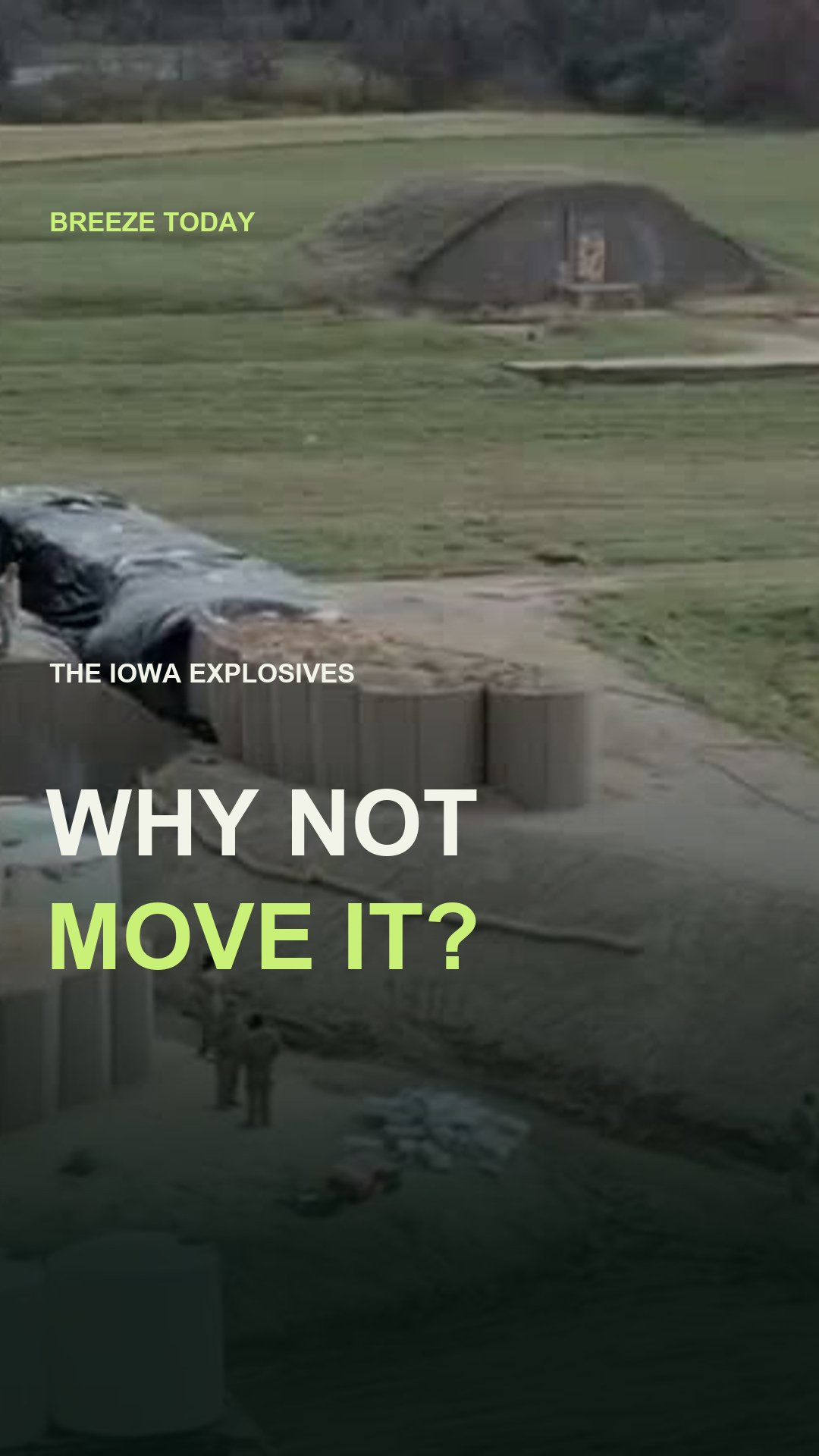
Why Could the Army Not Just Move the Iowa Explosives?
Why the Army detonated degraded lead azide in Iowa, why moving the drums was dangerous, and what EPA's initial airborne lead monitoring does and does not establish.
Watch on YouTube
What Does No Lead Detected After the Iowa Blast Actually Mean?
Why the Army detonated degraded lead azide in Iowa, why moving the drums was dangerous, and what EPA's initial airborne lead monitoring does and does not establish.
Watch on YouTubeFollow the evidence
Sources and reporting
The original reporting date is shown above. These sources support the reported event and the additional explanatory context; a party’s statement is identified separately from an independent account.
- Army explains the degraded stockpile, alternatives and containment measuresU.S. Army
- Public safety advisory and stockpile conditionU.S. Army
- Pre-detonation sample counts and monitoring planU.S. EPA
- Initial real-time airborne lead monitoring statementU.S. EPA
- Learn about lead and its health effectsU.S. EPA
- Army detonates stockpile following delaysABC News
- Jordan Gillis explains the operation, original Army recordingU.S. Army / delivery via KXII
- Army preparation footage published November 25U.S. Army
Images, footage and media credits 5 credits
Current Army preparation footage and official photographs are dated in their captions. Original diagrams explain the published material and sample counts; they do not predict the actual plume. The appearance of U.S. Department of War (DoW) visual information does not imply or constitute DoW endorsement.
- Iowa site preparation, publishedNovember 25, 2026U.S. Army. U.S. government-produced recording. Muted excerpts, selected frames and source-derived backgrounds; added watermark cropped, original edit and score substituted. No endorsement implied.
- Interagency briefing,November 24, 2026Staff Sgt. Daniel Hernandez / U.S. Army. Public domain, item-level DVIDS record. Photograph resized for editorial use.
- Army briefing recording,November 24, 2026The U.S. Army. Federal agency-produced current-affairs recording. Bounded muted excerpts; source/date identification retained in the editorial composition.
- Jordan Gillis statement, publishedNovember 25, 2026U.S. Army; public delivery via KXII. U.S. government-produced statement, source identified by distributor. Complete contextual sentence excerpted with original speech audio; added captions and lower strip cropped and replaced with matching editorial captions. Speaker identity preserved.
- Stockpile, containment, lead and sampling diagramsBreeze Today. Original editorial graphics. Drawn from the cited primary records, with exact sample arithmetic and qualified schematic geometry.