
The orbital return, explained
Why Does Catching Starship After Orbit Matter?
SpaceX caught Starship after its orbital flight on November 14. Here is why the upper-stage return matters, why the booster was lost, and what reuse still requires.
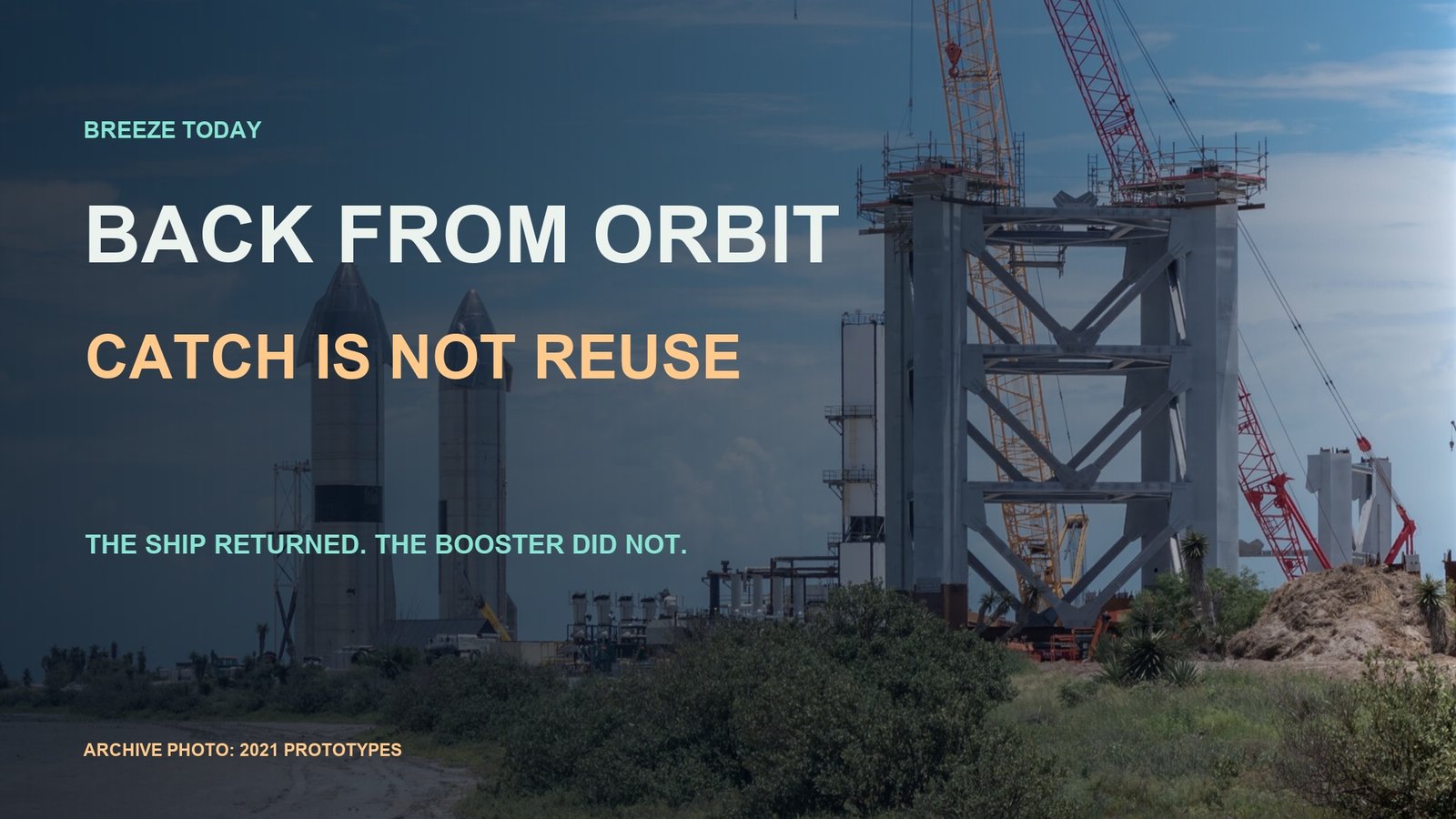
The new achievement was the orbital ship coming home
SpaceX recovered a Starship upper stage at its Texas launch tower on November 14, 2026, after an orbital mission. The spacecraft descended toward the same launch site it had left the previous day, used its engines for its final landing maneuver, and was caught by the tower's mechanical arms. The company describes the flight as lasting about 22.5 hours. Reuters and SpacePolicyOnline independently reported the successful return.
The important word is upper stage. Starship is both the name commonly used for the entire two-stage rocket and the name of the spacecraft above the Super Heavy booster. Earlier booster catches and this orbital-stage catch are different events. This flight demonstrated the return of the part that had continued into orbit. It did not recover the entire two-stage system: the booster was lost.
Read the source SpaceXReuters, Joey RouletteSpacePolicyOnline, Marcia Smith
Why two stages create two recovery problems
Super Heavy provides the initial ascent before separating from the upper stage. Starship then continues its mission with its own engines. Each section follows a different flight profile, and each needs its own successful return if SpaceX is to recover both parts of the system on one mission.
A booster can attempt to return after its relatively short initial flight. The upper stage must first complete the orbital part of its mission, then leave orbit, survive atmospheric entry and arrive at the launch site in a condition that permits a controlled final descent. Calling both operations a rocket catch hides the differences in the journey that comes before the tower arms close.
This distinction also explains why footage of an earlier Super Heavy catch cannot stand in for evidence of an orbital Starship recovery. The hardware arriving at the tower, the time spent in flight and the return conditions are different. Dated archive photographs and clips can explain the development program, but the Flight 15 result has to be established from reporting and the mission record for that flight.
Read the source SpaceXSpacePolicyOnline, Marcia Smith
See the distinction
A milestone is not the whole reuse chain
| Evidence | Conclusion it supports |
|---|---|
| Ship completes the reported return and catch | That specific orbital ship recovery. |
| Postflight condition is established | What damage or further work is identified. |
| A recovered vehicle flies again | A demonstrated reuse, when it occurs. |
| Repeated operations and measured costs | Evidence about consistency, turnaround and economics. |
What Flight 15 accomplished before the catch
Flight 15 launched from Starbase, Texas, on November 13. SpaceX's mission report says the upper stage entered orbit and deployed 26 Starlink V3 satellites. The company reported contact with all of them and said they were beginning to raise their orbits. Those are the operator's statements about the payload, rather than an independent assessment of each satellite's performance.
After payload deployment, the spacecraft continued coasting around Earth while controllers monitored its systems. Independent reporting describes 14 orbits. SpaceX places the return roughly 22.5 hours after launch. The demonstration therefore combined an orbital payload mission with an attempt to recover the spacecraft at its point of departure. It was substantially different from a short vertical prototype hop.
Read the source SpaceXReuters, Joey RouletteSpacePolicyOnline, Marcia Smith
From orbit to the tower
SpaceX says a single Raptor sea-level engine restarted for the deorbit burn. That maneuver began the spacecraft's path out of orbit and through the atmosphere. Atmospheric entry requires the vehicle to lose its orbital speed while managing the intense heating of that return. Thermal protection and flight control are essential parts of the process.
According to the company, Starship approached the Texas coast, made a final maneuver over the Gulf and descended through clouds. Three engines started for the landing flip and slow final descent before the tower arms caught the ship. The original explanatory artwork shows the broad distinction between the tower, the ship and its return. It is a schematic, not flight footage or an engineering reconstruction of measured trajectories.
Read the source SpaceXReuters, Joey Roulette
The booster had a different outcome
SpaceX's report says Super Heavy relit 32 of the planned 33 engines for the boostback burn, but the burn ended early because of low fuel mass. The company says the root cause is under investigation. Its guidance, navigation and control system triggered an automated abort of the tower-return attempt and diverted the booster offshore.
The company describes a landing burn over the Gulf, followed by activation of the flight termination system after engine shutdown. These causal and operational details are SpaceX's account. They should not be treated as the findings of a completed independent investigation. The outcome is less ambiguous: the booster was not recovered, so Flight 15 did not bring both stages back intact.
Read the source SpaceXReuters, Joey Roulette
Catching a ship and reusing it are separate milestones
Recovery preserves hardware that can be examined after a flight. It also creates the possibility of flying that hardware again. But a successful catch does not establish the amount of inspection, refurbishment, repair or component replacement required before another launch. Those tasks are central to whether a launch system can operate frequently and economically.
Reuters reports that Starship's heat shield remains an area of development for rapid reuse, including tile designs intended to reduce refurbishment. The distinction matters because landing successfully once is a different test from surviving repeated missions with manageable work between them. Neither a single recovery nor a development goal establishes a routine turnaround time.
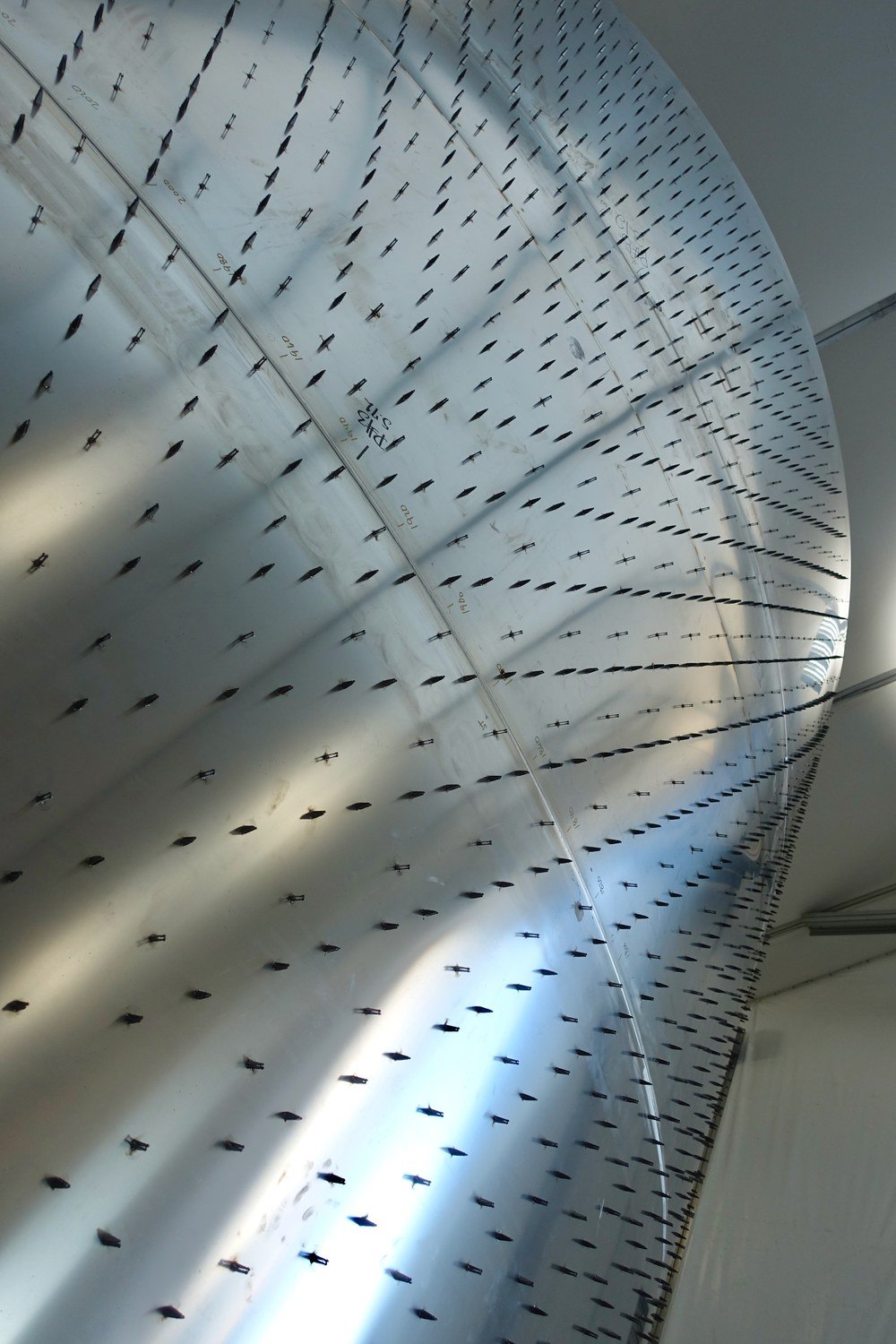
The heat-tile photograph below provides a close look at attachment hardware from an earlier development vehicle. Its value is explanatory: thermal protection involves physical components whose post-flight condition matters. It cannot tell us how many tiles Flight 15 lost, which parts need replacement or how long the recovered ship will take to prepare for another mission. Those questions require evidence about this particular vehicle after its return.
Read the source Reuters, Joey RouletteSpaceX
What this means for launch costs
The attraction of reuse is straightforward: recovering expensive hardware can reduce how much equipment has to be manufactured for the next flight. The actual operating result depends on much more than whether a vehicle reaches the ground intact. Maintenance demands, reliability and the ability to fly recovered equipment again all matter to the promise.
This flight therefore supports a specific conclusion about capability, rather than a precise forecast about prices. It demonstrated an orbital upper stage returning to its launch tower. It did not establish the cost of a routine Starship launch, a commercial passenger fare or a dependable launch rate. Those claims would need evidence from later operations.
Read the source Reuters, Joey RouletteSpacePolicyOnline, Marcia Smith
The evidence to watch next
The returned vehicle's condition is one important question. Another is the explanation for the booster's low-fuel problem. Recovering both stages on the same mission would address a different gap, while flying recovered hardware again would provide further evidence about reuse. A useful assessment keeps those questions separate instead of treating every later test as a repeat of the same achievement.
The next practical test of the broader promise is how much work the hardware needs and whether SpaceX can repeat its successes. An ambitious launch cadence, lunar missions and journeys beyond Earth involve additional capabilities. This tower catch should not be used as proof that all of those capabilities are already available.
For future updates, four pieces of evidence are especially useful: an inspection account for the recovered upper stage; a substantiated explanation of the booster failure; a mission that recovers both stages; and another flight using recovered hardware. These would answer different questions about recovery, reliability and practical reuse. A launch announcement or an ambitious target alone does not resolve them.
Read the source SpaceXReuters, Joey RouletteSpacePolicyOnline, Marcia Smith
Why the catch matters
Flight 15 produced a substantial new result and an important limitation on the same mission. Starship's upper stage completed an orbital journey and returned to the tower. Its booster did not come home. Preserving both facts gives a clearer picture of progress than either declaring the entire system reusable or dismissing the ship recovery because the booster failed.
The achievement brings the goal of full-system reuse closer by demonstrating a difficult return capability. The remaining work concerns the reliability of the whole system, recovery of both stages, the condition of the returned vehicle and the effort required to launch recovered hardware again. Those are the results that will show how far one dramatic catch can lead.
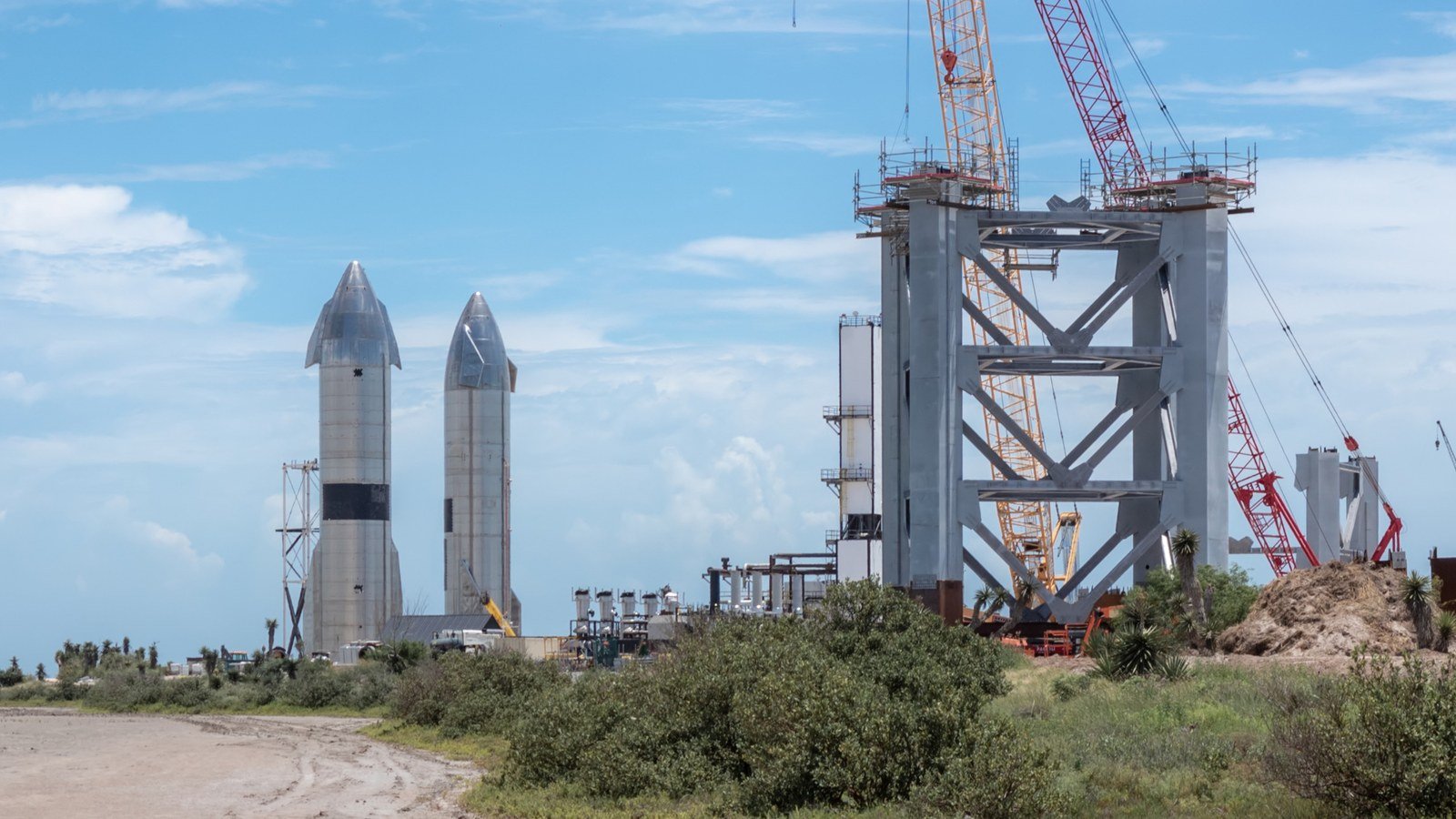
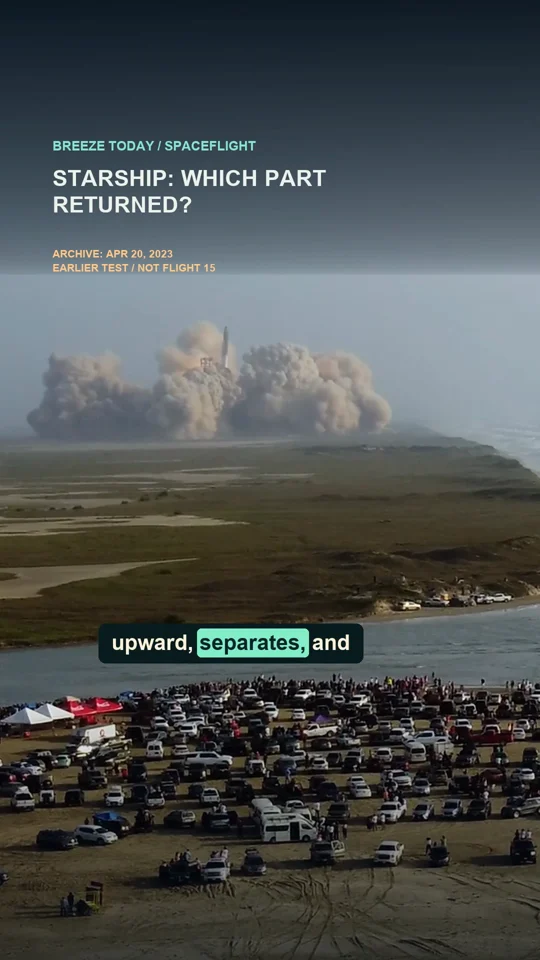
Visual context: this article now includes real Starbase, prototype and heat-tile-hardware photographs, each dated and credited. They are historical context, not pictures of the November 2026 catch. The companion video uses several separately identified archive sources: NASA ground and aerial cameras from November 2023, a licensed April 2023 launch view, the October 2024 booster catch, and November 2024 footage from the International Space Station. None is presented as Flight 15 footage. Original diagrams are reserved for explanation, and attributed narration is not an original recording of a company or NASA speaker.
Read the source SpaceXReuters, Joey RouletteSpacePolicyOnline, Marcia SmithNASA
A three-question test for a dramatic rocket recovery video
First ask which vehicle is in the frame. Starship is often used as the name of the overall system, but the upper-stage ship and the Super Heavy booster are distinct vehicles. Their flight paths and recovery tasks are not interchangeable. A familiar image of a booster returning to the tower should not be used as proof of what happened to the orbital ship.
Next ask which part of the mission the image establishes. The final seconds at the tower show a recovery event. They do not, by themselves, describe every earlier orbital operation, the vehicle's condition after flight or what inspections will find. The reported chronology is what connects those seconds to the orbital mission, rather than the visual resemblance to an earlier test.
Finally ask what conclusion is being drawn from the recovery. The report supports the specific milestone described above. A further claim about quick turnaround, repeat use or routine operating costs needs additional evidence. This three-question approach preserves the significance of the catch without forcing one dramatic moment to prove the entire future operating model.
Read the source SpaceXSpacePolicyOnline, Marcia SmithReuters, Joey Roulette
What repeatability would add to the evidence
A first successful recovery answers whether a particular vehicle completed that recovery under the conditions of that flight. A sequence of later recoveries would let observers ask a different question: how consistently the system can achieve the result. A demonstrated reflight would answer another question again. These are related milestones, not different names for a single achievement.
The ship's condition and the work needed before another flight are important parts of a reuse claim. If someone describes a catch as evidence of lower costs, ask which maintenance and operating steps have actually been measured. A proposed economic benefit should not be presented as an observed cost simply because the recovery hardware worked on one occasion.
The distinction also helps explain why mixed outcomes deserve to remain visible. The orbital ship's achievement does not require every part of the integrated test to have had the same outcome. The booster result belongs in the account too. Evaluating the system means retaining both observations and tracking the next evidence, rather than selecting only the most celebratory or most critical frame.
Read the source Reuters, Joey RouletteSpacePolicyOnline, Marcia SmithSpaceX
A little more clarity
Questions, answered
Was this the same achievement as an earlier booster catch?
No. The article concerns the ship returning after orbital flight. The Super Heavy booster is a separate stage and had its own outcome in this test. An earlier booster recovery is relevant history, but a dated archive clip of it is not footage proving the orbital ship's later recovery.
Does recovery automatically mean the ship is ready to launch again?
No. Recovering the vehicle creates the opportunity to inspect its condition and assess further work. A demonstrated reflight would be additional evidence. The article therefore distinguishes catching, inspecting, refurbishing where needed and actually reusing the vehicle, instead of treating the final tower maneuver as proof that every reuse step has been completed.
Why does the report keep the booster’s different outcome?
Because the test involved more than one vehicle and more than one objective. The ship's successful recovery and a different booster result can both be true. Leaving either out would make it harder to assess the integrated test. The useful conclusion identifies the specific achievement while retaining the rest of the reported mission evidence.
Watch a focused explanation
Explore this story in Shorts
Each Short answers a specific question. Keep reading for the complete context and sources.
Why Is This Starship Catch Different?
The orbital Starship and the Super Heavy booster are different vehicles with different recovery challenges. See why catching the returning ship is a separate milestone.
Watch on YouTube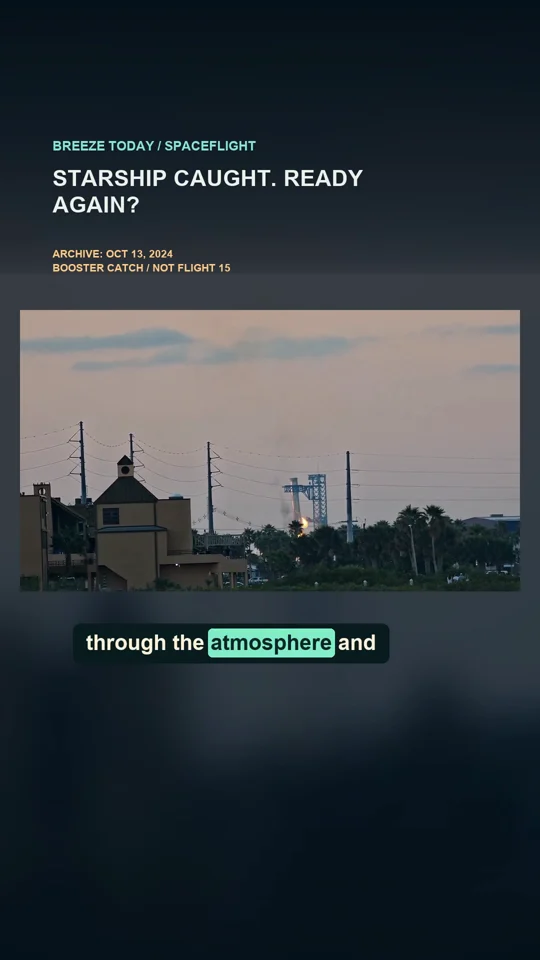
Does Catching Starship Mean It Is Ready to Fly Again?
A successful catch recovers the vehicle. Inspection, refurbishment and a demonstrated reflight are further steps before routine reuse can be claimed.
Watch on YouTubeFollow the evidence
Sources and reporting
The original reporting date is shown above. These sources support the reported event and the additional explanatory context; a party’s statement is identified separately from an independent account.
- Starship Flight 15 mission reportSpaceX
- SpaceX Starship returns to landing pad from orbit, acing test for reusable rocketsReuters, Joey Roulette
- SpaceX Catches a StarshipSpacePolicyOnline, Marcia Smith
- NASA archive footage: Starship Flight 2, November 18, 2023NASA
Images, footage and media credits 8 credits
- November 2023 Starship test tracked by NASA WB-57 camerasNASA WB-57 visible-light camera. US federal government work, public domain. Selected dated archive excerpts; original instrument timestamp retained; captions and event labels added. This is not Flight 15 footage.
- November 2023 NASA Starship test footageNASA. US federal government work, public domain. Native inset; borders cropped; original audio muted; always dated archive.
- October 2024 Flight 5 booster launch and catchAnne Toal. CC BY 3.0. Trimmed; original sound muted; dated archive label; captions; native landscape or inset portrait. Earlier booster, never the Flight 15 upper stage.
- June 2021 Starbase photographAlexander Hatley. CC BY 2.0. Cropped and panned; shaded/text overlays; archive site context, not the current flight.
- June 2021 Starship prototype photographAlexander Hatley. CC BY 2.0. Cropped and panned; shaded/text overlays; earlier prototypes clearly labeled. Also used for thumbnail.
- April 2023 Starship launch filmed from MatamorosLuis Martinez. CC BY 3.0. Trimmed, reframed and overlaid with captions/date labels. Native 3840x2160 source; portrait crop remains within native source size. No source audio track.
- November 2024 Starship Flight 6 seen from the International Space StationNASA Johnson Space Center / International Space Station external cameras. NASA-produced public-domain imagery; NASA media guidelines. Trimmed before the NASA closing slate; captions and archive label added. Portrait uses native downsampled footage panel over a blurred decorative source background. Silent source audio muted. Not a Flight 15 or reentry recording.
- December 2020 Starship heat-tile attachment hardwareSteve Jurvetson. CC BY 2.0. Native-resolution crops, restrained pans and caption/date overlays. Earlier thermal-protection hardware, not returned Flight 15 hardware.