Beyond the dictionary
Why Do Some Words Feel So Powerful?
Explore why literal meaning cannot explain every emotional reaction to language, with bilingual research, social examples and a careful look at a laboratory experiment.
A sentence can carry more than its literal meaning
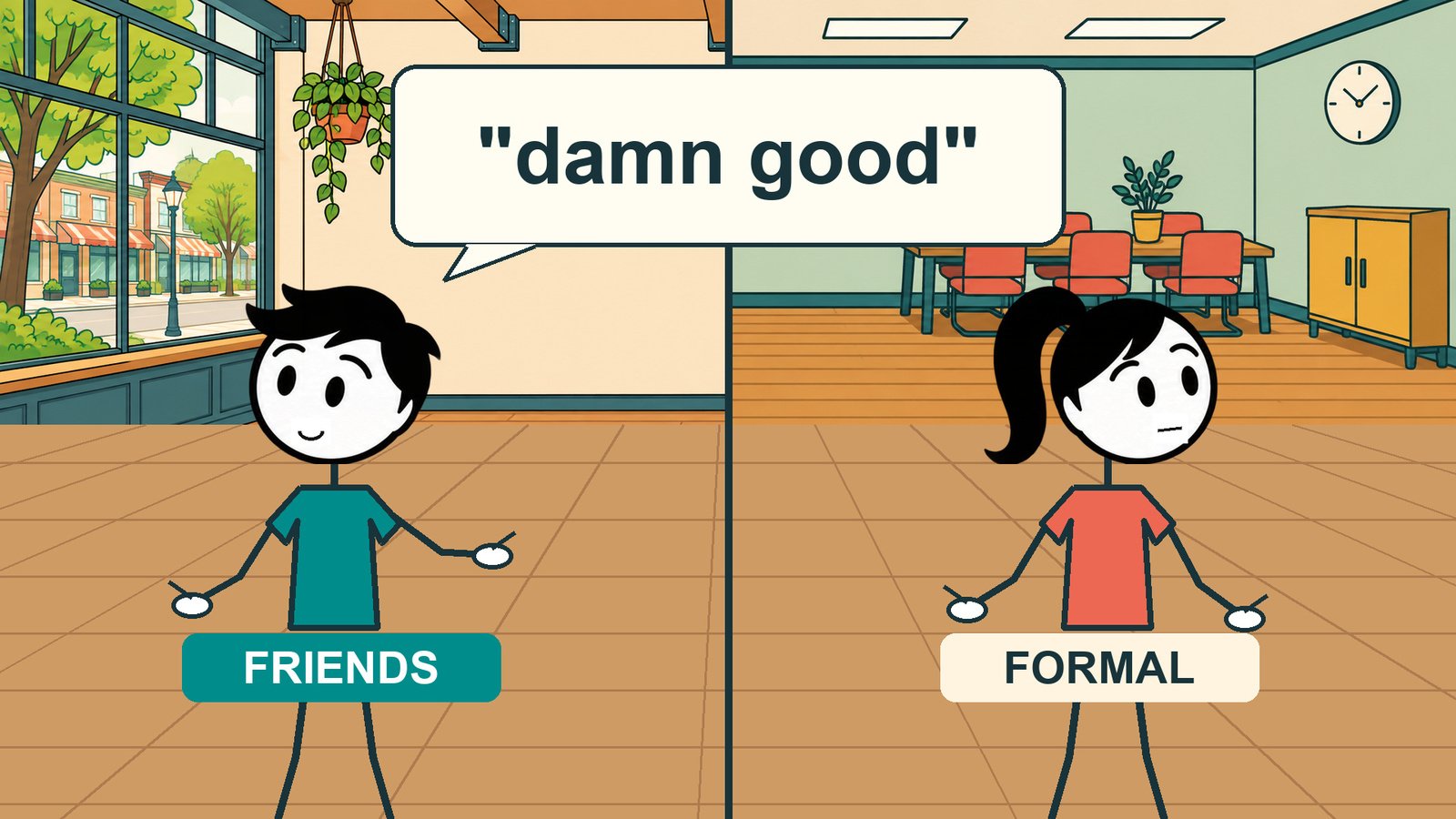
Imagine two fictional friends leaving a concert. Alex says, "That was damn good," and Maya laughs. Now place the same sentence in a formal meeting with someone Alex barely knows. It could still be welcomed, but it could also create an awkward pause. The words themselves have not changed. The relationship and expectations have. This ordinary contrast is a useful starting point for thinking about emotionally charged language: a definition tells us something, but it cannot tell us everything that a listener will hear.
A word can identify something, express a feeling and perform a social action at the same time. A compliment can announce enthusiasm while also signaling informality. An expression can invite solidarity, challenge a rule or make another person feel targeted. Those possibilities should not be collapsed into a single claim that a word is either harmless or harmful in every setting. A better question is what the speaker and listener have learned, and what the expression is doing in their present interaction.
Read the source Jay and Janschewitz, Journal of Politeness Research (2008); publisher abstract inspected
Learning a definition is different from learning its force
Consider a learner who finds an expression in a dictionary. They can memorize the spelling, translation and a usage label. That is useful knowledge. It may still leave them uncertain about a joke between friends, a quotation in a classroom or a confrontation with a stranger. These examples are illustrations of the difference between knowing a lexical meaning and knowing how language is used. They are not a set of universal rules for what any particular word will do.
The emotional context of learning offers one explanation for this gap. Expressions can become associated with memorable reactions and relationships. Hearing a reprimand, sharing a daring joke or noticing that a conversation suddenly stops can make language personally significant. The story is richer than a simple rule that punishment creates every taboo. A person learns across many encounters, and the same expression may have several associations. An illustrated memory linked to a word is a model of that idea, not a photograph of a mental object or a map of a particular brain circuit.
Read the source Harris, Aycicegi and Gleason, Applied Psycholinguistics (2003); author university copyPeer-reviewed original research, full text in PubMed Central

What a bilingual experiment actually measured
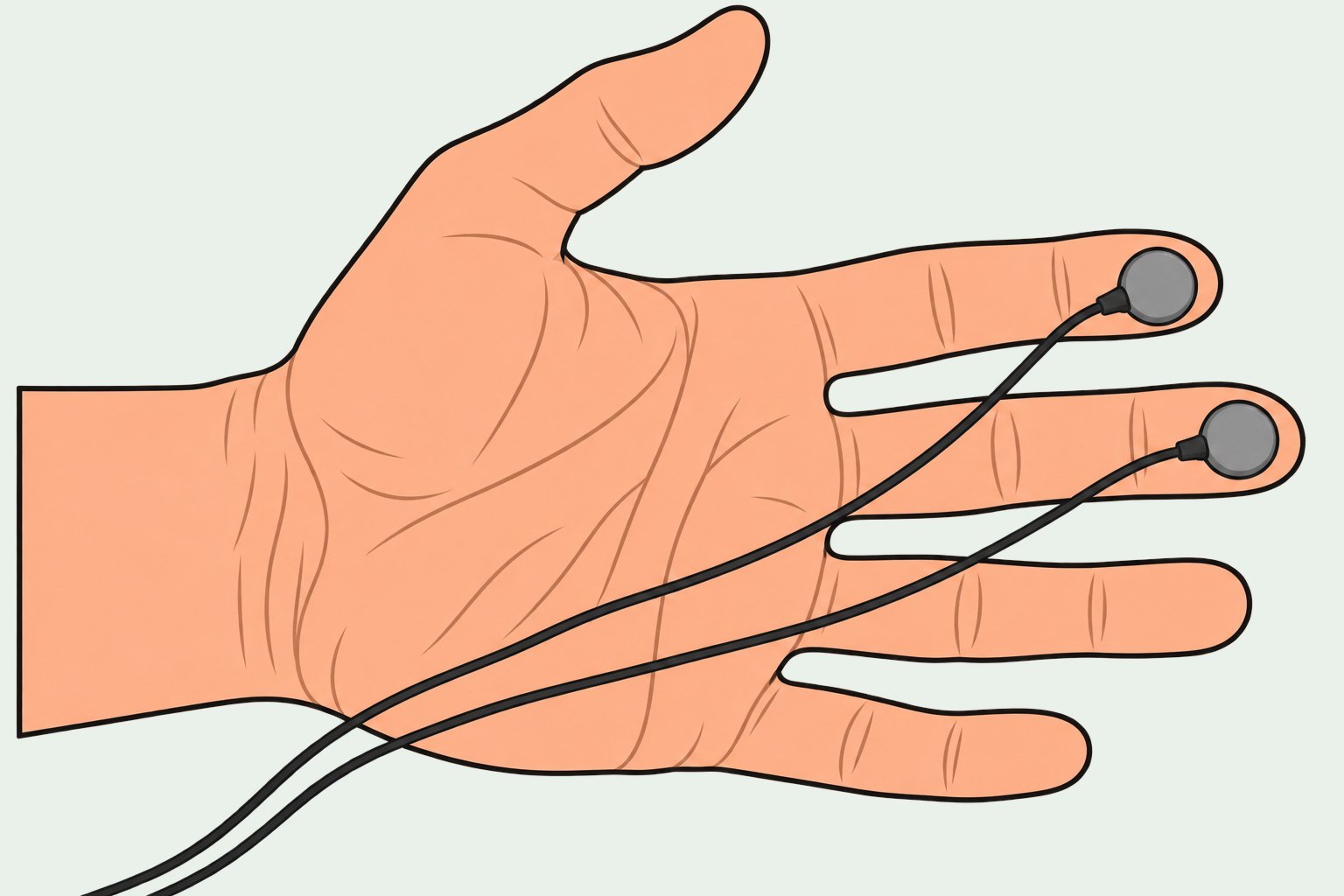
Harris and colleagues studied 32 Turkish-English bilinguals while measuring skin conductance. Taboo expressions and childhood reprimands elicited greater responses in their first language than in their second. This is an interesting physiological comparison, but the measured variable matters. Skin conductance concerns electrical conductance through the skin, influenced by sweat activity. It does not reveal a specific thought or identify a particular emotion on demand.
A careful reading keeps the sample and comparison attached to the result. It describes these participants under these experimental conditions. It does not establish that every bilingual person has a weaker emotional life in a second language. Nor does it rank languages by emotional capacity. A personal history of using a language at home, at school, at work or in intimate relationships is different from the language system itself. The study gives evidence about responses to particular material; broader claims need broader evidence.
Read the source Harris, Aycicegi and Gleason, Applied Psycholinguistics (2003); author university copy
A contrast within English adds another question
A later study compared responses to American and British taboo words among American English speakers with little direct contact with British English speakers. The researchers found a larger late positive electrical brain response for the American taboo words. This makes the question more interesting than a simple first-language-versus-second-language contrast: relevant social experience can differ within a language as well.
The authors also discussed a comprehension difference between the word sets as a limitation. Understanding, familiarity and social experience can overlap, which makes clean causal interpretation difficult. The finding supports a role for how words are encountered, while leaving room for further tests. It is not evidence for a single taboo switch in the brain. Our illustrations therefore show different histories of contact and different experimental conditions, rather than an invented circuit that supposedly turns all strong language on or off.
Read the source Peer-reviewed original research, full text in PubMed Central
Hold the phrase still and change the relationship
The cafe example becomes more useful when treated as a controlled thought exercise. Keep the exact phrase on screen. Keep the speaker recognizable. Change only the relationship or setting you are considering. What interpretation becomes plausible? A friend might hear shared excitement; an unfamiliar colleague might be unsure whether a boundary has been crossed. Neither reaction is guaranteed. The point is to notice the information a bare word list leaves out.
Now change the purpose instead. Someone quoting an expression to discuss its use is doing something different from directing that expression at another person. A speaker intending warmth can still misjudge a listener. A listener recognizing a joke can still dislike it. These distinctions make interpretation more precise without requiring a rigid etiquette table. They also explain why a story about strong words should pay attention to actions and relationships, rather than simply displaying a succession of provocative examples.
Read the source Jay and Janschewitz, Journal of Politeness Research (2008); publisher abstract inspected
Try a small interpretation exercise
Write the same short compliment on three slips of paper. In the first imagined situation, it is spoken quietly to a close friend after a shared success. In the second, it is read aloud as a quotation during a language lesson. In the third, it is directed at someone during an argument, with an uncertain tone. Do not assign each slip a fixed score. Instead, list what extra information you would want before interpreting it: the relationship, the preceding conversation, the response from the listener and whether the words were quoted or directed.
This exercise does not test a physiological hypothesis. Its purpose is to expose missing context. If your answer changes when you learn who is speaking or what happened just before, you have identified information the dictionary entry did not provide. That is a more useful outcome than pretending that one word predicts the same reaction everywhere.
Read the source Jay and Janschewitz, Journal of Politeness Research (2008); publisher abstract inspected
Invented words make a revealing laboratory comparison
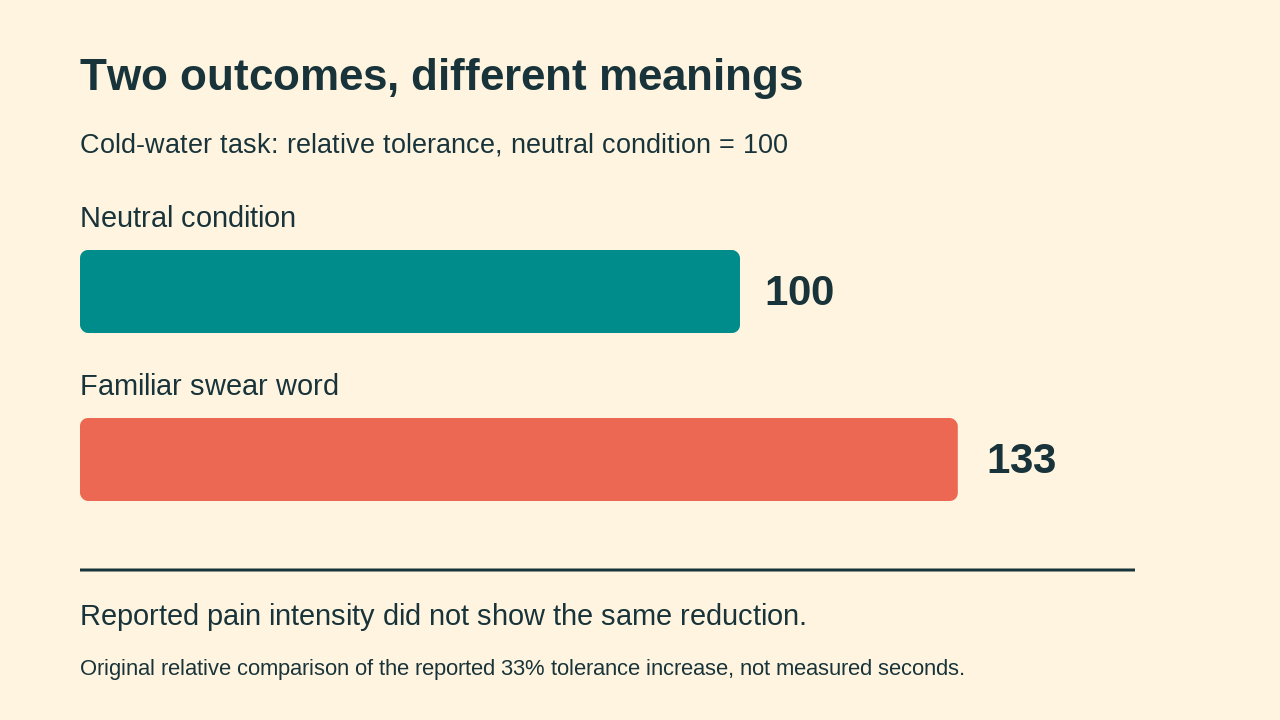
Stephens and Robertson tested a familiar swear word, a neutral condition and two invented alternatives with 92 English speakers in a cold-water hand task. The familiar swear word was associated with roughly one-third greater pain tolerance than the neutral condition. The invented words did not produce that benefit. Reported pain intensity did not show the same improvement. The distinction between tolerance and intensity is central to interpreting the result.
Tolerance describes how long someone remains in this particular task. Intensity concerns the reported experience of pain. A longer time does not mean that pain has disappeared, and a result from a controlled task is not a treatment recommendation. The comparison is useful here because an unfamiliar sound did not simply reproduce the familiar word's effect. It does not, by itself, explain why. The study's analysis did not establish a mediating mechanism, so our account leaves that question open rather than assigning the effect to a proven emotional pathway.
Read the source Stephens and Robertson, Frontiers in Psychology (2020)
Separate a result from the story told about it
When a finding is surprising, it is tempting to connect every observation with one neat explanation. A word feels charged, a physiological measure changes, and a laboratory task lasts longer: perhaps all three are one mechanism. That is a hypothesis to investigate, not a conclusion that follows automatically. The experiments use different participants, procedures and outcomes. Combining them responsibly means preserving those differences.
For a reader, three questions help. What was actually varied? What was actually measured? What conclusion would require an additional test? In the bilingual comparison, a skin measure should not become a precise emotional label. In the dialect comparison, an electrical response should not become a complete account of social learning. In the hand task, persistence should not become absence of pain. Each distinction protects the interesting result from a stronger claim than the evidence can carry.
Read the source Harris, Aycicegi and Gleason, Applied Psycholinguistics (2003); author university copyPeer-reviewed original research, full text in PubMed CentralStephens and Robertson, Frontiers in Psychology (2020)
See the distinction
Similar-sounding claims can mean different things
| Observation | Careful interpretation |
|---|---|
| A word is understood | Literal understanding does not establish personal emotional associations. |
| Skin conductance changes | A physiological arousal-related measure, not an identified emotion. |
| A task lasts longer | Tolerance in that task, not disappearance of pain. |
Harris, Aycicegi and Gleason, Applied Psycholinguistics (2003); author university copyPeer-reviewed original research, full text in PubMed CentralStephens and Robertson, Frontiers in Psychology (2020)
A practical way to read the room
For everyday interpretation, try a three-part check: history, relationship and purpose. History asks what the expression may already mean to the people involved. Relationship asks what level of familiarity and permission exists between them. Purpose asks whether the expression is a quotation, compliment, complaint, joke or direct attack. This is a thinking aid, not a diagnostic instrument or a formula that predicts another person's reaction.
If you are learning a language, a translation can be the beginning rather than the end of understanding. Notice actual responses, ask about unfamiliar usage and take correction seriously. If a phrase lands badly, explaining your intention may help, but it does not erase the listener's experience. The useful skill is attention to the interaction. You do not need a catalogue of stronger expressions to practice it; an ordinary ambiguous sentence provides plenty to examine.
Read the source Jay and Janschewitz, Journal of Politeness Research (2008); publisher abstract inspected
Why the same letters can leave a different impression
Return to Alex and Maya. The phrase on the screen is unchanged, yet the surrounding cues have developed: shared history, a familiar cafe, a formal room, a pause, an uncertain reaction. The visual demonstration has not shown words releasing a measurable substance or carrying a fixed charge. It has shown how interpretation can depend on information outside the dictionary entry.
The portable lesson is to resist both extremes: treating literal definitions as a complete account of language, or assuming that a charged expression has one inevitable effect. Research on learning and controlled responses makes a more careful explanation possible. Words are encountered by people with histories, in situations with expectations. To understand the atmosphere they create, look at that whole encounter.
Read the source Jay and Janschewitz, Journal of Politeness Research (2008); publisher abstract inspectedPeer-reviewed original research, full text in PubMed Central
A little more clarity
Questions, answered
Are words always more emotional in a first language?
No. A finding from one bilingual sample should not become a rule for every speaker. Language histories and contexts of use differ.
Harris, Aycicegi and Gleason, Applied Psycholinguistics (2003); author university copyPeer-reviewed original research, full text in PubMed Central
Did invented swear words reproduce the cold-water result?
The tested invented alternatives did not show the familiar word's benefit for tolerance in that experiment. The mechanism remained unresolved.
Can good intentions guarantee that a phrase is welcome?
No. A speaker's intended meaning and a listener's interpretation can differ. Relationship, setting and the particular expression all matter.
Jay and Janschewitz, Journal of Politeness Research (2008); publisher abstract inspected
Follow the reasoning
Sources and further reading
Explore the sources behind the explanation, from the central definitions to the examples and qualifications.
- Taboo words and reprimands elicit greater autonomic reactivity in a first language than in a second languageHarris, Aycicegi and Gleason, Applied Psycholinguistics (2003); author university copy
- Social acquisition context matters: Increased neural responses for native but not nonnative taboo wordsPeer-reviewed original research, full text in PubMed Central
- Swearing as a Response to Pain: Assessing Hypoalgesic Effects of Novel Swear WordsStephens and Robertson, Frontiers in Psychology (2020)
- The pragmatics of swearingJay and Janschewitz, Journal of Politeness Research (2008); publisher abstract inspected
Images, footage and media credits 2 credits
Maya and Alex are fictional explanatory characters. Original illustrations explain social situations and experimental distinctions; they are not participant portraits, actual study recordings or brain images.
- Dictionary close-upCyriac von Czapiewski. Pexels License. Selected frame at 2 seconds from 2021 footage. General dictionary context, not a research recording.
- Original social-context and fingertip illustrationsConcept Breeze, built-in image generation and local composition. Original commissioned explanatory artwork. Fictional characters and explanatory setup; not actual participants.